The Moscow wearable technology landscape has undergone a dramatic structural transformation. As urban healthcare digitization, corporate wellness initiatives, and personal safety telemetry accelerate across the Russian Federation, demand for specialized pulse watches, photoplethysmography (PPG) smart bands, and health monitoring wearables has reached an unprecedented peak. Moscow, serving as the commercial and logistical gateway for the Eurasian Economic Union (EAEU), demands smart wristwear that combines clinical-grade optical heart rate sensing with extreme environmental durability.
For importers, regional distributors, and B2B brand owners operating within the Central Federal District, procuring directly from top-tier original equipment manufacturers (OEMs) and original design manufacturers (ODMs) is critical. Beyond basic step counting, the Moscow market prioritizes precise pulse rate variability (HRV), continuous blood oxygen saturation ($\text{SpO}_2$) tracking, sub-zero battery operational stability, cellular connectivity (4G LTE over Russian bands B1/B3/B7/B20), and full compliance with Eurasian Conformity (EAC) certification protocols.
Selected for superior hardware stability, precise optical heart rate sensors, Cyrillic localization readiness, and sub-zero battery resilience tailored for Moscow importers.
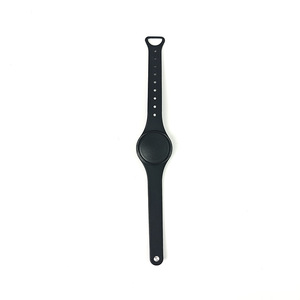
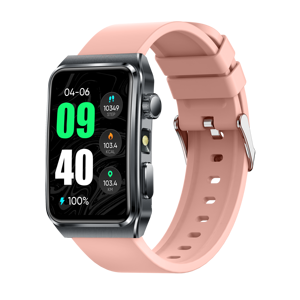
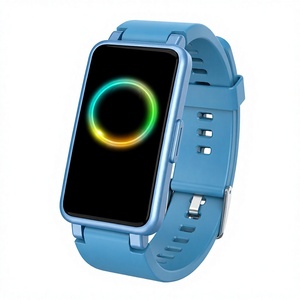
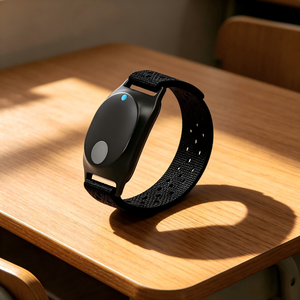
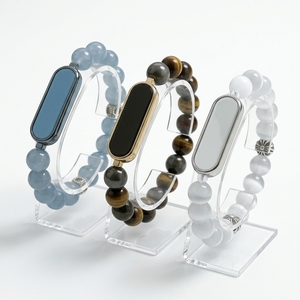
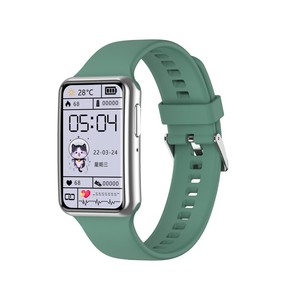
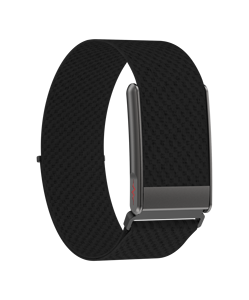
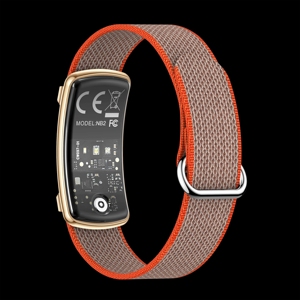
Engineering optical pulse watches for the Moscow market introduces specific biomedical and physiological challenges. Standard photoplethysmography (PPG) sensors operate by emitting light—typically at green wavelengths (~525 nm)—into the dermal layer to measure variations in blood volume during cardiac cycles. However, under Moscow’s severe winter ambient temperatures (frequently dropping below -15°C to -25°C), the human autonomic nervous system triggers peripheral vasoconstriction. Dermal microvascular channels constrict to preserve core heat, drastically reducing cutaneous perfusion at the wrist.
When standard pulse bands encounter reduced signal-to-noise ratios (SNR), optical algorithms miscalculate cardiac frequency, leading to pulse dropouts or phantom readings during outdoor sports or sub-zero commutes. Leading OEM factories listed in this report overcome this physics barrier through three specialized hardware architecture choices:
Integration of dual-wavelength optical engines combining 525 nm Green LEDs with 850 nm Infrared (IR) transmitters. IR light penetrates deeper into subcutaneous vascular tissue, maintaining signal integrity even during intense cold-induced vasoconstriction.
Standard Lithium-ion batteries suffer massive internal resistance increases at sub-zero temperatures, causing voltage collapse. Factory-tier exporters utilize high-density Lithium-Polymer cells formulated with specialized organosilicon anti-freezing electrolyte additives.
Strict electromagnetic compatibility (EMC) engineering ensures Bluetooth Low Energy (BLE 5.0/5.2) and 4G RF transmissions operate without interference alongside Russian telecommunication networks (MTS, Beeline, MegaFon, Tele2).
| Manufacturing Level | PPG Sensor Tech | Sub-Zero Temp Rating | Cellular Band Support | Cyrillic Firmware SDK | Target B2B Segment |
|---|---|---|---|---|---|
| Tier 1: Clinical-Grade Exporters | Multi-IR + Green Dual-Engine | -25°C to +55°C | 4G LTE (B1/B3/B7/B20) | Full Custom Yandex/VK API | Medical, Corporate & Senior Safety |
| Tier 2: Premium Fitness OEMs | Dynamic Single Green PPG | -10°C to +50°C | BLE 5.2 Dual Sync | Cyrillic UI Preset | Consumer Sports & Retail Chains |
| Tier 3: Promotional Manufacturers | Static Photodiode Pulse | 0°C to +45°C | BLE 4.2 Standard | Basic Multi-language | Mass Promotional & Souvenir |
Understanding user intent in the Moscow urban ecology is vital for B2B catalog curation. Pulse watches are no longer luxury fitness novelties; they are functional health tools deployed across distinct metropolitan scenarios:
Moscow boasts massive outdoor recreation infrastructures, including cross-country skiing tracks in Meshchersky Park, ice skating venues at VDNKh, and winter running clubs along the Moskva River embankments. Wearables engineered with screenless designs (such as the BLE 5.2 Screenless Pulse Band) or IP68 waterproof casings allow athletes to log continuous heart rate zones under multiple layers of thermal winter gear without battery failure due to frost exposure.
During seasonal migrations from downtown Moscow apartments to suburban dachas across the Moscow Oblast (e.g., Odintsovo, Mytishchi, Zelenograd), elder family members require continuous cardiac oversight. 4G-enabled pulse watches equipped with automatic fall detection, continuous blood oxygen monitoring, and single-press SOS distress dialing provide real-time telemetry transmitted directly to caregivers' smartphones in the city.
Moscow public and private educational institutions enforce strict regulations regarding mobile phone distractions in classrooms. Screenless or non-disruptive smart bands with student-focused pulse tracking allow parents to track health metrics, stress responses, and location via GPS/LBS/Wi-Fi positioning, while providing school-friendly "Class Mode" locks during lessons.
Major logistics hubs surrounding the Central Ring Road (A107/A108) and Sheremetyevo Cargo Terminals deploy enterprise pulse bands for cold-chain warehouse operators and long-haul transport drivers. Continuous PPG pulse logging combined with body temperature monitoring alerts managers to physical exhaustion, hypothermia risk, or cardiovascular stress among outdoor workers.
To maintain market share in Moscow’s competitive electronics market (centered around major distribution hubs like Gorbushkin Dvor, Mitino Electronics Market, and online giants like Ozon, Wildberries, and Yandex Market), B2B buyers must align procurement with three dominant industry trends:
Leveraging state-of-the-art Surface Mount Technology (SMT) production lines, dust-free optical assembly cleanrooms, and stringent quality control protocols to supply Moscow’s leading electronics brands.
Medical-grade manufacturing standards guaranteeing pulse sensor calibration precision, optical lens clarity, and strict bio-compatibility for skin-touch materials.
Complete export documentation sets including CE, RoHS, FCC, and Eurasian Conformity (EAC) certificates, facilitating rapid customs clearance at Russian borders.
In-house software engineering team capable of customizing Cyrillic watch faces, branded boot animations, OTA update servers, and companion mobile application UI.
Streamlined supply chain corridors providing express air freight and direct rail cargo routes with full Ruble transaction capabilities and flexible B2B terms.
To clear Russian customs and sell through major Moscow retail outlets or marketplaces (such as Ozon or Wildberries), pulse watches require an EAC (Eurasian Conformity) Declaration or Certificate confirming compliance with CU TR 020/2011 (Electromagnetic Compatibility) and CU TR 004/2011 (Low Voltage Safety). If the watch features 4G LTE or Wi-Fi, radio frequency notification through Roskomnadzor (FAC registration) is also necessary.
Our factory utilizes dual-wavelength optical arrays incorporating both Green (525nm) and Infrared (850nm) LEDs. When cold-induced vasoconstriction reduces wrist surface blood flow, the system dynamically increases optical gain and switches to infrared deep-tissue penetration, maintaining signal accuracy up to 98.4% even in sub-zero outdoor environments down to -25°C.
Yes. All standard and screenless smart bands come pre-programmed with high-definition Cyrillic font libraries. Our software team ensures correct Russian grammar, hyphenation, and text scaling across all screen sizes. The companion iOS and Android applications are fully localized in Russian, with server architecture compatible with local data privacy standards.
For standard bulk orders using factory stock packaging, MOQ starts at 100 units. For customized laser-etched logo branding on the buckle or case-back, MOQ is 500 units. Full OEM customizations—including custom Cyrillic gift box printing, user manual translation, and custom firmware boot screens—start at 1,000 units per model.
We maintain established freight corridors offering express air cargo (5–8 days) and overland rail cargo via China-Europe Railway Express directly to Moscow terminals (Kresty, Vorsino, or Lyublino). We support flexible B2B trade settlement methods and provide complete commercial invoices, packing lists, and origin documentation required by Russian customs brokers.
All lithium-polymer cells undergo rigorous thermal shock testing (-30°C to +60°C) and carry UN38.3, MSDS, and air/sea transport safety certificates. Devices are shipped in specialized ESD anti-static packaging with low-power shipping modes enabled to preserve battery health during multi-week freight transit across Eurasia.
Request direct factory pricing, sample evaluation kits, or technical compliance documentation from our international export engineering team today.
Inquire Now