Enterprise-grade smart wearables custom-engineered for child tracking, senior safety monitoring, and student wellness, certified for regional compliance and telecom compatibility.
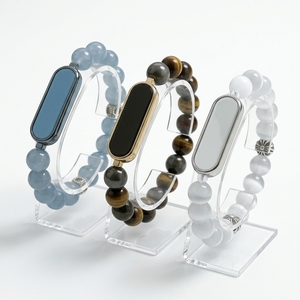
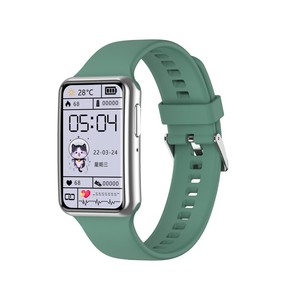
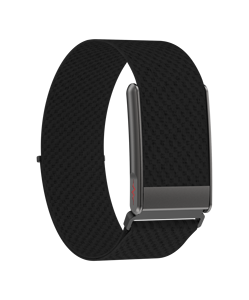
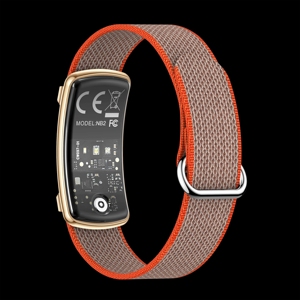
As Greater Tokyo consolidates its position as the world's most populous megacity with over 37 million residents, the demand for sophisticated, micro-targeted safety wearables has experienced an unprecedented structural surge. The convergence of Japan's unique social landscape—characterized by early childhood independence, elementary school commutes (Tsugaku-ro), a rapidly aging demographic (Choujou Shakai), and high seismic activity risks—requires wearable safety devices that go far beyond off-the-shelf consumer smartwatches.
For global brand owners, telecommunications operators, senior care chains, and institutional procurement departments seeking safety watch factories and suppliers in the Tokyo market, selecting the appropriate OEM/ODM manufacturing partner demands an in-depth understanding of localized telecommunications infrastructure, Japanese Radio Law regulations (TELEC / MIC compliance), strict privacy standards, and specialized mechanical engineering protocols.
Tokyo presents a highly specialized market for safety technology. Unlike North American or European markets where children are primarily transported by personal vehicles or school buses, Tokyo elementary school students independently commute via public railway systems (JR East, Tokyo Metro, Toei Subway) and dense pedestrian walkways. Concurrently, Japan’s demographic structure features over 29% of its population aged 65 or older, with Tokyo's suburban zones (such as the Tama area) witnessing an acute need for non-intrusive remote health monitoring and wandering prevention systems.
| Target Demographic | Primary Technical Requirement | Tokyo Cellular Spectrum / Connectivity | Compliance & Regulatory Standard |
|---|---|---|---|
| Elementary Students (Ages 5–12) | Classroom anti-distraction, geo-fence exit alerts, 1-touch SOS, zero web browsing | 4G LTE Band 1/3/19 (Docomo), Band 1/3/8 (SoftBank), Wi-Fi Positioning | TELEC MIC, RoHS, JIS Z 2801 Antibacterial Strap |
| Active Seniors & Dementia Care | Automated Fall Detection, Medication Voice Reminders, Remote Medical Vitals | 4G LTE-M / NB-IoT, BLE 5.2, Dual-Frequency GNSS (L1+L5) | ISO13485, TELEC, PSE Battery Certification |
| Subcontractors & Lone Workers | Ruggedized IP68/IP69K, Man-down detection, Haptic ambient notifications | 4G LTE Standalone, Push-to-Talk (PoC) Over Cellular | JIS C 0920 Dust/Waterproofing, MIL-STD-810H |
When sourcing safety watches from factories supplying the Tokyo metropolitan area, technical buyer teams must audit supplier production capabilities across four primary hardware and firmware pillars:
A. Multi-Constellation Positioning & Deep-Urban Navigation: Tokyo’s dense skyscraper corridors in Shinjuku, Marunouchi, and Roppongi create extreme signal reflection ("urban canyon effect"). Superior suppliers incorporate hybrid positioning engines blending GPS, GLONASS, Galileo, and Japan’s local QZSS (Michibiki) zenith satellite network, combined with Wi-Fi BSSID triangulation and Cell-ID LBS. This multi-layered approach reduces location drift from 100 meters down to under 3.5 meters even inside subterranean shopping complexes.
B. TELEC (MIC) Certification & Spectrum Optimization: Operating radio frequency equipment in Japan without a TELEC Certificate of Radio Equipment Conformity under article 38-24 of the Japanese Radio Law is illegal. Qualified OEM factories must supply pre-certified RF modules compatible with Japan’s designated LTE frequency bands (specifically Band 19 for NTT Docomo suburban coverage and Band 18/26 for KDDI performance).
C. Battery Management & Low-Power RF Architecture: To support a full day of active location reporting without bulky form factors, leading Tokyo-ready safety bands utilize ultra-low-power Nordic Semiconductor or ASAR chipsets paired with dynamic adaptive ping rates. Battery management ICs (PMICs) must be certified under Japan’s PSE (Electrical Appliance and Material Safety Law) to ensure thermal stability during fast charging.
Combining world-class SMT manufacturing lines with deep firmware localization engineered specifically for the Japanese enterprise and retail sector.
Engineered for high-density Tokyo urban canyons utilizing Japan’s Quasi-Zenith Satellite System for sub-5 meter real-time child and senior tracking accuracy.
Zero legal barrier to market. All wireless components, LTE modules, and lithium polymer battery cells hold certified TELEC mic marks and PSE safety compliance.
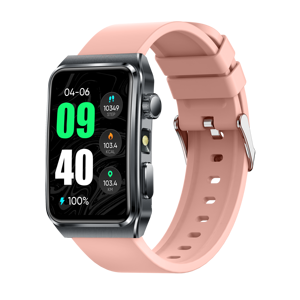
Advanced PPG optical sensors measuring continuous heart rate, blood oxygen (SpO2), estimated blood pressure, and skin temperature for institutional Japanese nursing homes.
Sourcing safety smartwatches requires aligning product capabilities with specific operational environments. Below are four dominant localized deployment scenarios in Tokyo where our factory solutions excel:
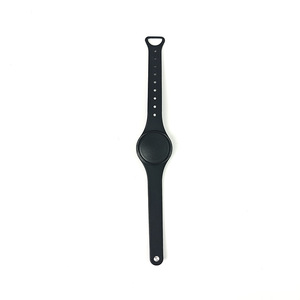
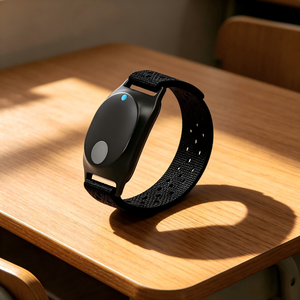
Every morning across Tokyo's 23 special wards, hundreds of thousands of elementary school children walk independently to school. Parents require real-time visibility without providing a distraction-filled smartphone. Our series of specialized smart bands—such as the Screenless Smart Band IP68 and Angel Watch™ Series R—offer automated geo-fencing around school perimeters and train stations. If a student deviates from their customary route, parental apps receive instant push notifications via high-speed 4G telemetry.
In municipalities like Hachioji, Machida, and Tachikawa, home-care facilities utilize our Senior Assist GPS Safety Watch to safeguard elderly residents affected by cognitive decline or Alzheimer's. The integrated 3D tri-axial accelerometer automatically distinguishes between normal daily movements and hard falls. In the event of a fall, the watch instantly initiates a sequential 3-number SOS voice call sequence while relaying precise GPS and Wi-Fi positioning coordinates to designated family caregivers or medical emergency response desks.
In major infrastructure projects such as Tokyo bay coastal redevelopment, subway line extensions, and skyscraper construction, worker safety is regulated by strict Ministry of Health, Labour and Welfare guidelines. Ruggedized safety wristbands equipped with man-down sensors, ambient temperature monitoring (preventing heatstroke during humid Tokyo summers), and haptic silent alerts provide real-time site supervisor telemetry without impeding heavy manual labor.
Expert answers addressing regulatory compliance, Minimum Order Quantities (MOQ), firmware customization, and Japanese cellular carrier compatibility.
Yes. All RF modules utilized in our 4G LTE and Bluetooth safety watches maintain full TELEC (MIC Japan) certification. We provide complete technical construction documentation and certificate copies to simplify your local Japanese customs clearance and brand registration.
Our 4G LTE models feature multi-band cellular modems supporting NTT Docomo (B1/B3/B19), SoftBank (B1/B3/B8), and KDDI (B1/B18/B26). Devices support standard nano-SIM cards as well as soldered MFF2 eSIM chipsets for seamless B2B carrier provisioning.
We provide full end-to-end OEM customization, including custom silicone/nylon strap molding, laser-engraved brand logos, Japanese language UI translation, customized packaging boxes, white-label iOS/Android caregiver apps, and direct server API/SDK integrations for institutional monitoring platforms.
Every single device undergoes 100% automated positive air-pressure leakage testing on the assembly line, adhering to IP67, IP68, or IP69K ingress protection ratings (JIS C 0920 standards). This guarantees protection against Tokyo's rainy seasons (Tsuyu) and daily handwashing.
Standard sample dispatch occurs within 48 hours. Mass production orders for 1,000 to 10,000 units typically carry a manufacturing lead time of 18 to 25 days, followed by fast air freight shipping (3-5 days) to Tokyo Haneda (HND) or Narita (NRT) airports, or sea freight to Tokyo Port.
Expand your product catalog in the Tokyo market with TELEC-certified, high-reliability safety smartwatches for kids, seniors, and enterprise applications. Contact our OEM engineering team today to request hardware samples and full spec documentation.
Get Catalog