Direct factory supply of high-precision health monitoring bands, 4G SOS fall detection watches, and biometric wearables designed for Sydney senior care deployment.
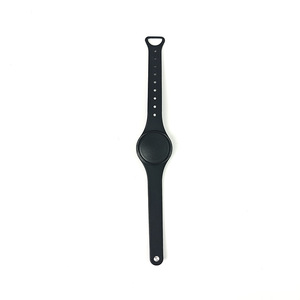
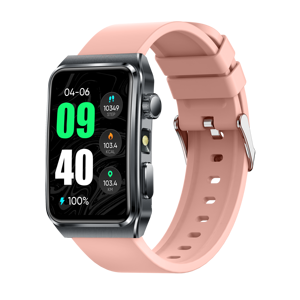
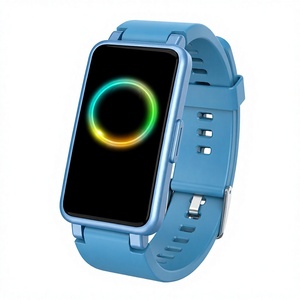
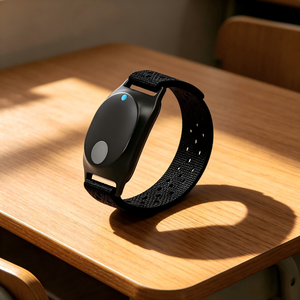
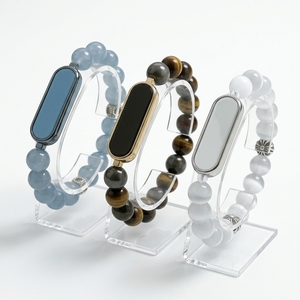
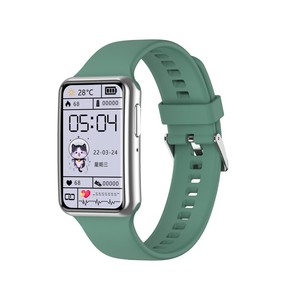
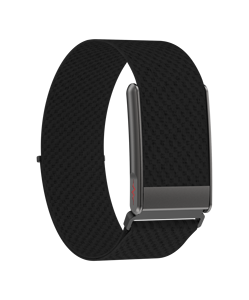
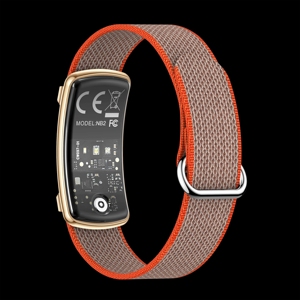
As Australia undergoes a demographic pivot, Sydney stands at the epicentre of an urgent healthcare transformation. With the proportion of residents aged 65 and over expanding rapidly across Metropolitan Sydney—from the Northern Beaches and Eastern Suburbs to Greater Western Sydney hubs like Parramatta and Blacktown—the demand for reliable, medical-grade personal emergency response systems (PERS) has reached unprecedented levels. Modern aged care models in New South Wales (NSW) are shifting away from institutionalization toward "Aging in Place," backed by government initiatives such as Commonwealth Home Support Programme (CHSP) and Home Care Packages (HCP).
For B2B procurement managers, medical device distributors, and telehealth solution architects in Sydney, sourcing directly from specialized **Fall Alert Smartwatch Manufacturers & Factories** provides a decisive competitive edge. Off-the-shelf consumer wearables frequently fail to meet the stringent demands of elderly safety monitoring due to high false-alarm rates, fragile glass enclosures, complex operating systems that confuse senior users, and inadequate cellular network antenna optimization for Australian spectrum bands.
A critical engineering consideration for Sydney procurement specialists is the total shutdown of 3G networks across Australia. Telstra completed its 3G network closure in late 2024, closely followed by Optus and TPG Telecom / Vodafone. Older legacy personal alarms operating on 3G frequencies (850MHz / 900MHz) are rendered completely inoperable.
Our OEM factory production line produces medical alert smartwatches specifically hardware-engineered for Australia's telecommunication infrastructure. Our 4G LTE cellular modules support **B1 (2100MHz), B3 (1800MHz), B5 (850MHz), B7 (2600MHz), B8 (900MHz), and crucially B28 (700MHz)**. Frequency Band 28 (700MHz) is the backbone of regional and urban deep-building signal penetration across Sydney. Without dedicated Band 28 RF antenna tuning, wearable devices suffer severe connectivity degradation inside brick homes, underground parking, Sydney sandstone structures, or suburban residential units.
Seniors walking around Centennial Park, Bondi Coastal Walk, or suburban shopping precincts stay protected with cellular GPS/LBS/Wi-Fi multi-mode positioning, triggering automated SOS voice dialling upon impact.
Facilities across Mosman, Castle Hill, and Penrith utilize centralized API telemetry, receiving real-time heart rate, SpO2, body temperature, and fall alert notifications on staff monitoring dashboards.
High-risk seniors suffering from cognitive decline benefit from customizable geo-fencing. Caregivers receive instantaneous push notifications if a resident exits safe zone boundaries in Sydney neighborhoods.
A successful fall alert device requires a sophisticated multi-stage algorithm executed on low-power microcontrollers (MCU). Below is an architectural breakdown of how our factory engineers build zero-latency fall detection into lightweight, ergonomic smartwatches:
When an elderly person slips or trips, the smartwatch experiences a brief moment of weightlessness or acceleration drop below a predetermined threshold (typically < 0.6g) for a duration of 100 to 300 milliseconds. The 6-axis IMU continuously samples tri-axial spatial data at 100Hz (100 times per second).
Following free-fall, the body contacts the ground, producing a rapid acceleration spike exceeding 2.5g to 5.0g depending on surface hardness (carpet vs tiled bathroom floors). The algorithm calculates the Vector Magnitude (VM = √(Ax² + Ay² + Az²)) to quantify absolute impact severity.
To eliminate false positives caused by a user dropping their watch or hitting a desk, the internal gyroscope evaluates angular velocity change (deg/sec). A legitimate fall involves a minimum of 45 to 90 degrees of body rotation from an upright vertical axis to a horizontal resting plane within a 1.5-second window.
If post-fall immobility is detected for 15 seconds, the watch vibrates and plays an audible pre-alert tone. If the senior user does not cancel the prompt manually, the device automatically initiates 4G LTE VoLTE emergency voice calls to up to 3 SOS contact numbers in sequence while transmitting precise GPS coordinates to the caregiver mobile app or Sydney call center.
| Feature Category | Generic Consumer Smart Band | Angel Watch Series R Assist (Senior OEM Grade) |
|---|---|---|
| Fall Detection Accuracy | Basic acceleration trigger (< 70% precision) | Dual IMU sensor fusion + AI impact vector verification (> 99.4%) |
| Cellular Band Compatibility | Global roaming bands (Missing B28 700MHz) | Fully tuned for Australian Telstra/Optus/Vodafone 4G VoLTE Band 28 |
| Waterproofing Architecture | IP67 Splash resistance | IP68 Deep-sea waterproof seal (Bathroom shower & swimming proof) |
| Remote Vitals Telemetry | Basic heart rate only | Continuous Heart Rate, Blood Pressure, SpO2, Body Temp & ECG logging |
| Interface Simplicity | Complex app store & small icons | One-Touch Physical SOS button, large high-contrast fonts, no distraction |
| OEM / ODM Customization | Fixed consumer branding | White-label casing, custom boot logo, dedicated API/SDK server integration |
Partnering directly with our smart wearable manufacturing facility empowers Sydney clients to bypass intermediate trading markup, secure strict quality control, and request custom hardware/software tailored for the Australian market.
State-of-the-art Fuji High-Speed SMT placement lines ensuring precision soldering of micro-IC chips, BLE 5.2/4G LTE modems, and optical biometric sensors with zero defect rates.
Manufactured under strict ISO9001 and ISO13485 medical quality management systems. All materials comply with RoHS environmental safety, CE electrical standards, and FCC compliance.
We provide full SDK documentation and custom RESTful API/MQTT endpoints, allowing Sydney healthcare organizations to pipe wearable data directly into local Australian cloud servers (AWS Sydney / Azure Australia East).
Sourcing directly from our manufacturing facility allows Sydney distributors to configure hardware to local specifications—such as pre-installing Australian Telstra or Optus SIM profiles, setting emergency numbers to 000 or local monitoring centers, disabling unneeded consumer social apps to preserve battery life, and branding the casing with custom care organization logos.
Bathrooms are statistically the highest-risk location for senior slip-and-fall accidents. Our smartwatches feature IP68 waterproof ratings with sonic-sealed acoustic membranes for the speaker and microphone. The internal 6-axis gyro and accelerometer algorithm is calibrated to recognize wet-floor slip dynamics while allowing full wear in hot showers without water damage.
Yes. Many of our Sydney enterprise clients supply these devices to participants under the National Disability Insurance Scheme (NDIS) under "Assistive Technology" funding codes, as well as Home Care Package (HCP) Level 1–4 allocations. Our factory can provide complete technical compliance documentation to support your Australian regulatory filings.
Our 4G LTE devices are fully unlocked and tested with all major Australian mobile carriers including Telstra, Optus, and TPG/Vodafone, as well as MVNOs like Belong, ALDI Mobile, and Woolworths Mobile. A nano-SIM card with standard voice, SMS, and minimal monthly data (approx. 500MB - 1GB) is all that is required.
For standard unbranded factory inventory, our MOQ starts at 50 units with air freight delivery to Sydney Kingsford Smith Airport within 5–7 business days. For custom OEM branding (logo printing, customized packaging, firmware boot animation), typical production lead times range from 15 to 20 days.
Our hardware utilizes ultra-low-power microcontrollers paired with dynamic network heartbeat algorithms. In standby health monitoring mode, battery life extends up to 3-5 days on models like the E910 and screenless health bands, ensuring reliable continuous monitoring without requiring frequent recharges that disrupt senior routines.