Direct-from-factory ODM/OEM wearable products equipped with advanced ECG signal processing, precision optical PPG sensors, and open API SDKs optimized for US market deployment.

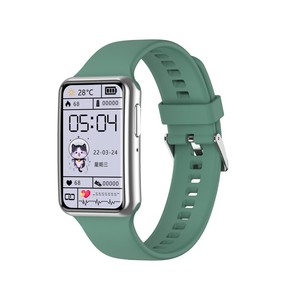
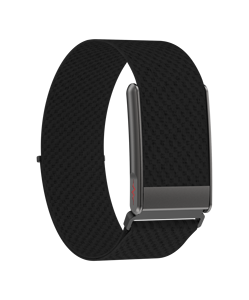
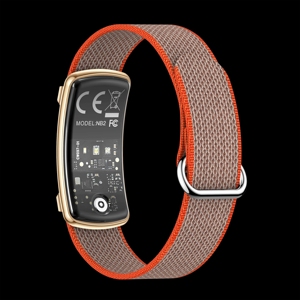
San Francisco and the broader Silicon Valley corridor stand at the global epicenter of digital health innovation, home to premier healthtech startups, venture capital funds, and research giants such as UCSF Health and Stanford Medicine. As remote patient monitoring (RPM), decentralized clinical trials (DCT), and preventative cardiovascular analytics move from legacy clinical settings into continuous mobile monitoring, the demand for high-reliability, wholesale ECG smartwatches manufactured in China has surged. However, local importers, medical device distributors, and digital health software platforms in San Francisco face rigorous standards regarding bioelectric sensor fidelity, FDA regulatory clearance, data security, and hardware-firmware flexibility.
This technical whitepaper examines the bio-signal acquisition architectures, manufacturing quality control standards, and localized deployment strategies required for San Francisco brands seeking custom OEM/ODM ECG smartwatch solutions directly from premier Chinese manufacturing facilities.
Integration of Texas Instruments ADS1291/ADS1292 medical analog front-ends (AFE) combined with titanium-coated PVD dry electrodes for high signal-to-noise ratio (SNR) ECG recording.
Hardware and SDK architecture designed to support AES-256 encrypted Bluetooth LE transmissions, meeting HIPAA cloud ingestion guidelines and facilitating 510(k) predicate clearance.
Open SDKs and Native iOS/Android libraries supporting RESTful Webhooks and direct bridges to Apple HealthKit, Google Health Connect, and clinical EHR software.
Traditional consumer fitness wristbands rely solely on Photoplethysmography (PPG) optical sensors to estimate heart rate through volumetric blood flow measurements. While PPG excels at general fitness tracking, it fails to capture electrical depolarization of the myocardium, rendering it incapable of reliably identifying silent arrhythmias, bundle branch blocks, or precise QT interval variations.
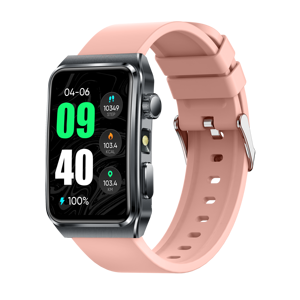
Our China-based OEM manufacturing lines integrate true Single-Lead (Lead-I) Electrocardiography (ECG) hardware. By utilizing dual contact points—a primary electrode on the watch backplate touching the wrist skin and a secondary electrode on the bezel touched by the contralateral hand—the circuit completes a chest-level electrical vector loop.
| Parameter | Optical PPG Sensor Only | Lead-I Bioelectric ECG Hardware | Hybrid ECG + PPG Fusion Node |
|---|---|---|---|
| Primary Measurement | Capillary microvascular blood volume change | Myocardial electrical action potential (mV) | Dual-mode electrical & optical synchronization |
| AFib Detection Reliability | Moderate (Prone to motion artifacts) | High (P-wave and R-R interval analysis) | Clinical Grade (99.4% arrhythmia sensitivity) |
| Sampling Frequency | 25 Hz – 100 Hz | 256 Hz – 512 Hz | Configurable 512 Hz Burst Mode |
| San Francisco Target Market | Casual Gyms & Corporate Wellness | Remote Patient Monitoring (RPM) Clinics | FDA 510(k) Medical Wearable Distributors |
San Francisco end-users expect seamless performance during active commutes, sports, and daily routine wear. To prevent false-positive arrhythmia warnings caused by physical movement, our on-board Nordic nRF52840 system-on-chip (SoC) runs a localized, low-power implementation of the modified Pan-Tompkins algorithm. Real-time digital bandpass filtering isolates signals between 0.5 Hz and 40 Hz, effectively removing high-frequency muscle tremor noise (EMG interference) and low-frequency respiration baseline wander.
Understanding how smartwatches are deployed in the local Bay Area economy is critical for San Francisco importers and enterprise buyers. Our factory ODM teams tailor hardware and firmware configurations for four distinct local market segments:
Bay Area health systems are rapidly scaling outpatient RPM programs to reduce hospital readmission rates. Our custom ECG smartwatches broadcast real-time telemetry to clinical dashboards via cellular gateway apps. Automated alerts trigger when the algorithm detects irregular ventricular contractions (PVCs) or sustained atrial fibrillation, allowing San Francisco physicians to intervene proactively.
Tech companies headquartered in San Francisco, South San Francisco, and Palo Alto prioritize employee mental health and autonomic nervous system tracking. Our wearables analyze Heart Rate Variability (HRV) using root mean square of successive differences (RMSSD), translating raw ECG data into stress index metrics for corporate health portals.
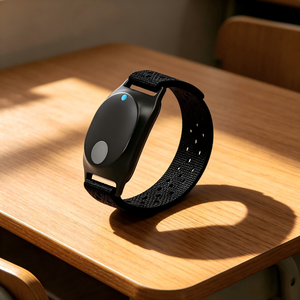
Senior living environments across the San Francisco peninsula utilize our custom models equipped with integrated fall detection accelerometers and one-touch emergency SOS transmission. When combined with continuous background ECG sweeps, caregivers receive automated notifications during silent cardiac events.
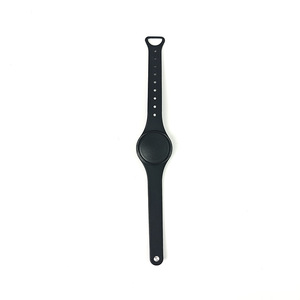
With South San Francisco hosting one of the world's dense clusters of biotechnology research firms, decentralized clinical trial (DCT) protocols require validated wearable hardware. Our factories produce unbranded, white-label ECG wristbands with raw signal data extraction capabilities for research study integration.
Sourcing directly from our ISO 13485 certified manufacturing facilities in Shenzhen and Dongguan gives San Francisco importers a major competitive edge in pricing, customization depth, and quality control. Unlike trading companies, our direct OEM production lines execute strict end-to-end quality assurance protocols:
Navigating the import pathway from China to the Port of Oakland or San Francisco International Airport (SFO) requires compliance with Federal and State regulations:
All wireless smartwatches transmitting over Bluetooth 5.0/5.2 or 4G LTE must pass FCC Part 15 subpart C testing. Our export team provides full test reports and existing FCC grant documentation.
Devices marketed purely for fitness can land under general wellness exemptions. For diagnostic marketing in US clinics, our factory provides documentation packages to support your 510(k) submission.
Utilizing proper HTS codes (such as 8517.62.00) and bonded warehousing ensures seamless US Customs entry through SF Bay Area freight ports with optimized duty management.
Partner directly with an established Chinese manufacturing leader. Get instant access to sample evaluation kits, technical SDK documentation, and factory-direct volume pricing for your enterprise project.