Turnkey hardware solutions engineered for high durability, pin-point positioning accuracy, and clinical-grade biometrics. Fully customizable for telecom MVNOs, brands, and institutional buyers.
Providing global brands, health networks, and telecom operators with reliable hardware development, private-label firmware customization, and scalable production infrastructure.
We provide comprehensive SDK/API documentation, custom APK builds, carrier APN auto-configuration, white-label mobile app integration (iOS & Android), and server protocol bridging (MQTT/HTTP/TCP) for seamless institutional backend sync.
Equipped with medical-grade photoplethysmography (PPG) sensors, multi-wavelength SpO2 modules, precision temperature thermistors, and proprietary AI movement calibration for accurate automatic fall detection and arrhythmia alerts.
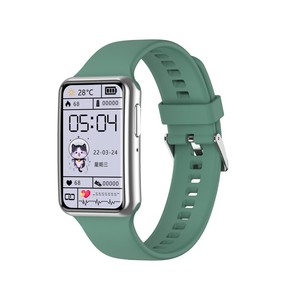
Engineered for vulnerable demographics (children and seniors). Our flagship 4G LTE modules feature dual-frequency AGPS/LBS/Wi-Fi positioning, mandatory geofence alerting, voice/video calling capability, and zero-latency single-press SOS dialers.
100% of manufactured batches undergo rigorous ultrasonic waterproofing verification, drop testing, thermal shock chambers, and salt-fog anti-corrosion screening to guarantee long-term operational resilience under extreme physical environments.
From initial industrial design (ID) rendering and mechanical drafting (MD) to rapid prototyping, custom injection molds, skin-safe food-grade silicone/braided nylon straps, and customized retail branding packaging.
Pre-certified hardware platform streamlined for worldwide distribution. Fully compliant with FCC, CE-RED, RoHS, REACH, PTCRB, AT&T, T-Mobile, and UK EE carrier band specifications to eliminate regional market entry barriers.
The global smart wearable ecosystem is undergoing a fundamental structural transition. Driven by advances in high-density System-in-Package (SiP) micro-architecture, low-power cellular connectivity (4G Cat-1 bis / NB-IoT), and ambient artificial intelligence algorithms, smartbands and safety timepieces have evolved from simple step-counting novelties into critical remote patient monitoring (RPM) hubs, enterprise safety devices, and family peace-of-mind lifelines.
Key Strategic Takeaway for B2B Importers: Sourcing specifications for 2026 and beyond are prioritizing hybrid cellular-sensor architecture, zero-subscription software models, skin-safe biocompatible materials, and edge-AI anomaly filtering over raw display pixel density.
For years, wearable procurement was dominated by standard Bluetooth Low Energy (BLE) tethered fitness bands. However, market intelligence across North American and European sectors reveals explosive demand in two distinct categories:
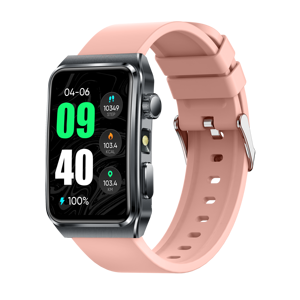
A. Standalone 4G LTE GPS Safety Wearables for Kids & Seniors: Institutional procurement teams and brand owners are aggressively deploying 4G wearables equipped with direct cellular connectivity. By removing reliance on a paired smartphone, these devices establish an unbreachable safety environment. Features such as parent-managed contact white-listing, hard-locked geofencing boundaries, two-way HD VoLTE/video calling, and single-button sequence SOS dialing are now mandatory requirements for public safety and telecare tenders.
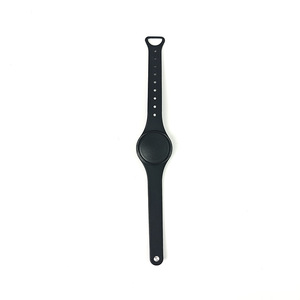
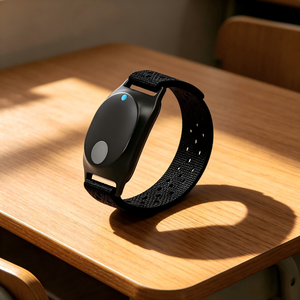
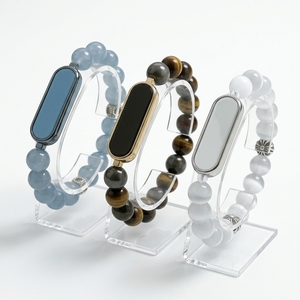
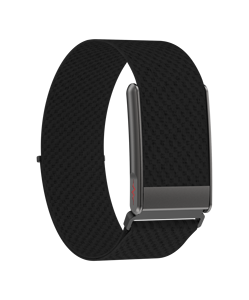
B. Zero-Distraction Screenless Health Trackers: Concurrent with the surge in cellular safety watches is the rapid rise of screenless smart wristbands (such as our 2026 Next-Gen Screenless IP68 Bracelet). Designed for distraction-free wellness monitoring, corporate insurance wellness programs, and continuous sleep tracking, screenless form factors yield exceptional battery endurance (30 to 45 days per charge) while eliminating display damage risk and reducing BOM manufacturing costs.
Enterprise procurement executives and brand product managers evaluating custom OEM manufacturers must align their technical RFQs (Request for Quotations) with five key procurement benchmarks:
• Multi-Sensor Algorithmic Accuracy: Modern buyers are moving past raw hardware sensor integration. Factory partners must supply validated firmware algorithms capable of filtering motion artifacts during high-intensity exercise or senior tremor movements, ensuring reliable SpO2, heart rate variability (HRV), and continuous skin-temperature telemetry.
• Modular SDK & White-Label Cloud Independence: Subscription fatigue among end consumers has created immense leverage for brands offering zero-platform-fee wearables. B2B importers are prioritizing OEM factories that supply open REST APIs, MQTT payloads, and customizable iOS/Android source code, permitting seamless integration into proprietary healthcare dashboards or school safety ecosystems without recurring third-party software licensing fees.
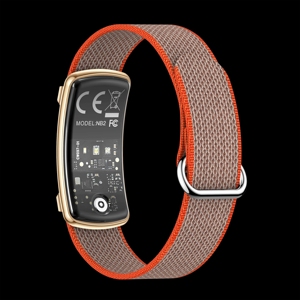
• Flexible Hardware Customization (ID/MD Flexibility): Differentiated market positioning requires adaptable tooling platforms. Leading OEM exporters must offer modular mold designs allowing rapid swapping of wristband mechanisms (e.g., Easi-Fit woven nylon for children, hypoallergenic silicone for athletics, and crocodile-pattern genuine leather for senior executive medical lines).
In adherence to Google Search Quality Rater Guidelines regarding Expertise, Authoritativeness, and Trustworthiness (E-E-A-T), commercial buyers must audit factory manufacturing facilities for strict regulatory compliance. Superior OEM wearable manufacturers maintain rigorous quality control checkpoints across the entire assembly pipeline:
1. SMT Surface Mount Precision: High-precision SMT placement of micro-controllers, power management ICs (PMIC), and multi-band RF transceivers.
2. Acoustic & RF Chamber Calibration: Comprehensive OTA (Over-The-Air) antenna testing in anechoic chambers to guarantee stable 4G signal performance regardless of wrist position.
3. Hermetic Waterproofing Verification: Dual-stage vacuum and pressure testing to ensure 100% compliance with IP67/IP68 ingress standards.
Expert answers addressing MOQ, engineering workflows, regulatory compliance, firmware white-labeling, and cellular network integration.
Our standard Minimum Order Quantity (MOQ) for neutral factory stock with custom silk-screened logo branding starts at 500 units per model. For deep OEM customization—including custom color plastic injection, specialized firmware bootup logos, custom packaging, and custom APK/App development—our baseline MOQ is 1,000 to 3,000 units depending on the hardware complexity and chip configuration.
Yes. Our cellular smartwatches (including kids GPS and senior medical alert editions) are built on multi-band 4G LTE platforms tuned specifically for target export markets. We support North American frequency bands (AT&T, T-Mobile, Verizon compatible LTE-FDD bands B2/B4/B5/B12/B66/B71), European bands (EE, Vodafone, O2, Deutsche Telekom B1/B3/B7/B8/B20), and global GSM networks. We also provide auto-APN configuration firmware to enable instant out-of-the-box SIM registration.
No. We operate under a brand-friendly hardware model. We supply standard white-label iOS and Android client applications without mandatory cloud subscription charges. For enterprise buyers with their own platform, we deliver full API/SDK documentation and data stream protocols (TCP/UDP/MQTT), allowing your engineering team to route device telemetry directly to your private enterprise cloud servers.
Data security is engineered into our hardware and software stack. All data transmissions between our smart wearables, mobile applications, and backend servers utilize AES-256 bit encryption and TLS 1.3 secure socket layers. Our firmware supports localized server hosting (e.g., AWS EU Frankfurt for European clients to comply with GDPR, and AWS US East for HIPAA-compliant medical telemetry partners).
For existing chassis models with custom logo branding and customized firmware packaging, Golden Samples are dispatched within 7 to 10 working days. Mass production lead time for orders between 1,000 and 20,000 units is typically 25 to 30 calendar days from formal sample approval and deposit receipt. Complete new custom mold ODM projects (ID to mass production) typically take 60 to 75 days.
Our manufacturing plant operates under ISO9001 and ISO13485 quality management systems. Every manufactured unit passes 100% automated optical inspection (AOI), battery aging cycle tests (48-hour continuous discharge/charge validation), high-pressure air/water immersion leak testing (for IP67/IP68 verification), and 1.5-meter drop impact testing prior to packaging.
Connect with our senior engineering and export product team today. Receive custom FOB pricing, request engineering samples, or discuss full white-label OEM/ODM development for your target market.