Direct factory offerings featuring IP67/IP68/IP69K waterproofing, advanced BLE 5.2/5.3 integration, real-time PPG biometric tracking, and white-label SDK architecture.
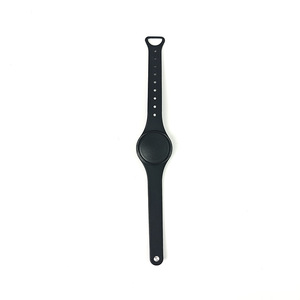
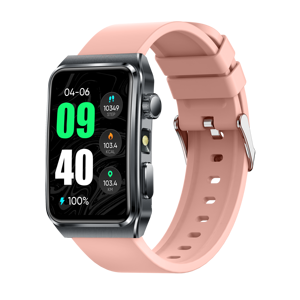
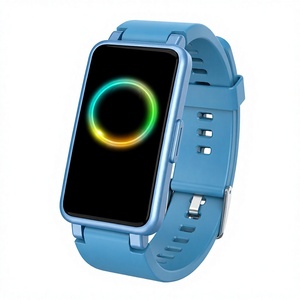
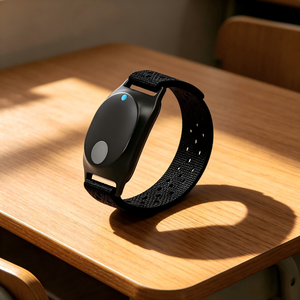
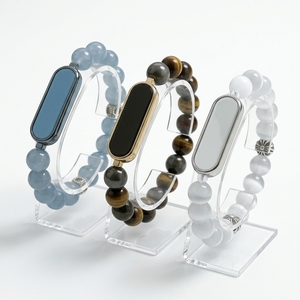
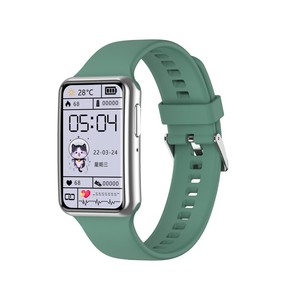
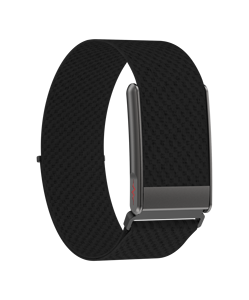
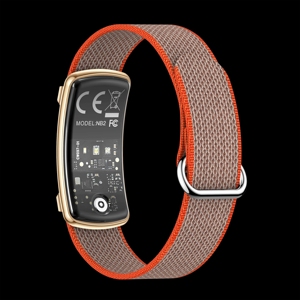
An analysis of manufacturing shifts, Bill of Materials (BOM) cost drivers, regulatory demands, and supply chain strategies in Shenzhen and Dongguan smart wearable hubs.
Global wholesale buyers are transitioning away from simple step-counting accelerometers toward integrated health architecture. Today's commercial procurement contracts demand continuous PPG heart-rate monitoring, SpO2 blood oxygen tracking, skin temperature sensing, and electrocardiogram (ECG) micro-arrays housed inside fully waterproof IP68 casings.
Waterproof failure remains the leading cause of consumer returns in smart wearables. Market trends reflect a shift toward Liquid Silicone Rubber (LSR) overmolding, double-o-ring crown assemblies, and ultrasonic structural welding. Importers prioritize factories with 100% automated pressure-chamber testing over random sample checks.
Hardware differentiation is insufficient for modern brands. Brands require customizable iOS and Android white-label companion applications. OEM factories must provide complete Software Development Kits (SDKs), open API endpoints, and cloud data routing options that comply with GDPR and HIPAA data protection mandates.
Understanding cost structures helps procurement managers negotiate contract terms and evaluate vendor tier pricing when sourcing from Chinese manufacturers.
| Component Category | Typical Cost Share (% of Total BOM) | Key Quality Drivers | Wholesale Risk Factor |
|---|---|---|---|
| Main System SoC & BLE Chipset | 25% - 35% | Nordic Semi, Realtek, Dialog, Ambiq Ultra-Low Power Core | Firmware instability, Bluetooth disconnects |
| Display Module (TFT / AMOLED) | 20% - 30% | Nits brightness, touch response rate, OCA bonding quality | Delamination, dead pixels under humidity |
| Biometric Sensors (PPG / ECG) | 12% - 18% | PixArt, Goodix, Silicon Labs optical sensor resolution | Inaccurate readings across dark skin tones |
| Enclosure, Glass & IP68 Seals | 15% - 22% | CNC zinc alloy, 2.5D tempered glass, LSR gasket seals | Water ingress during thermal expansion |
| Li-Po Battery & PMIC Architecture | 8% - 12% | Pure cobalt cells, Seiko battery protection IC, KC/UL certs | Capacity swelling, fast degradation cycles |
How tier-1 OEMs in China are addressing battery density, signal reflection, acoustic waterproofing, and structural durability.
Traditional waterproofing compromised speaker and microphone performance. Leading China factories now integrate high-density ePTFE acoustic membranes that allow sound waves to pass freely while blocking water molecules up to 5 ATM hydrostatic pressure. This engineering leap enables IP68 cellular video call smartwatches without sacrificing acoustic clarity.
With screenless activity trackers and AMOLED wearables gaining market share, energy management is crucial. Manufacturers implement SPI memory-in-pixel (MIP) screens alongside lithium-cobalt battery chemistry offering 300+ mAh/g energy density. Combined with Bluetooth 5.3 Low Energy protocols, standby runtime has increased from 7 days to over 30 days per charge.
By moving biometric processing from the companion app directly onto the smartwatch MCU (Edge AI), real-time anomaly detection—such as atrial fibrillation, sleep apnea events, and sudden fall detection—is processed instantaneously. This lowers cellular and Bluetooth payload size while increasing user privacy and response speed.
International compliance demands sustainable production practices. Top smart watch factories offer GRS (Global Recycled Standard) certified ocean-bound plastic straps, recycled aluminum alloy bezels, and non-toxic food-grade liquid silicone wristbands that comply with EU REACH and RoHS environmental standards.
Delivering turnkey smart wearable manufacturing services—from industrial design, tooling mold development, PCB layout, SMT surface assembly, to custom packaging.
Our manufacturing complex operates Class 100,000 dust-free cleanroom assembly workshops, ensuring zero particle contamination on display panels and optical sensor modules during lamination.
Every waterproof smartwatch undergoes dual-stage testing: air-pressure leak detection prior to potting, followed by 100% liquid hydrostatic immersion chamber testing to guarantee true IP67, IP68, or 5ATM ratings.
Our soft-hardware engineering group supports custom boot-up UI logos, tailored UI languages, integrated API server endpoints, custom Bluetooth broadcast UUIDs, and full SDK access for enterprise integrations.
We streamline international market entry by managing certification pathways for CE, FCC, RoHS, REACH, TELEC, NCC, PTCRB, and UN38.3 lithium battery transport compliance for all custom models.
Through strategic component buffering of popular BLE microcontrollers and display screens, we offer lower minimum order quantity tiers for initial custom brand testing with typical 15-to-20 day production cycles.
Our quality control workflow encompasses incoming component inspection (IQC), in-process assembly checks (IPQC), burn-in aging chamber validation (FQC), and final outbound AQL 0.65 sampling before dispatch.
Essential insights covering minimum order quantities, customization limitations, lead times, quality assurance, and international logistics.
For ready-to-ship wholesale orders with standard factory branding, the MOQ starts as low as 50 to 100 units. For custom OEM orders involving silk-screen logo printing, custom packaging, and customized boot-up screens, the standard MOQ is typically 500 to 1,000 units. Deep ODM customization (new tooling molds, custom PCB layouts, housing redesigns) generally requires an MOQ of 3,000 to 5,000 units depending on component specifications.
Our factories execute a two-tier testing protocol. First, assembled watch cases undergo a vacuum pressure differential test to verify seal integrity without water risk. Second, fully assembled devices undergo submergence testing in pressurized hydrostatic chambers simulating 1.5 to 50 meters of water depth (IP68 to 5ATM standard) for 30 minutes. 100% of production units pass dry air-pressure tests, while sample batches undergo destructive fluid submersion checks.
Yes. We provide comprehensive white-label app customization services. You can select between rebranding our tested baseline application (custom logo, color palette, UI layout, domain configuration, and publishing under your Apple App Store and Google Play developer accounts) or building a fully custom application using our provided Bluetooth API and SDK documentation.
Standard wholesale stock orders ship within 3 to 7 business days. Custom OEM production runs with branded packaging typically require 18 to 25 calendar days following golden sample confirmation and deposit receipt. Full ODM projects requiring original housing tooling molds require 35 to 45 days for initial sample fabrication plus 20 days for mass assembly.
Our standard smartwatch models are certified with CE (EMC & LVD), FCC, RoHS 2.0, REACH, and UN38.3 battery shipping safety certification. For specialized medical tracking or cellular wearables, we support PTCRB carrier approval, EN 62479 SAR exposure compliance, and ISO13485 quality control documentation for health monitoring deployments.
We offer a standard 12-month factory warranty covering all hardware defects, PCB faults, display malfunctions, and battery failures. Importers can select between two RMA options: receiving 1% extra spare units (spare parts/casing/chargers) shipped with the primary order to fulfill local customer exchanges, or returning verified defective units for repair/credit replacement on subsequent shipment cycles.
Connect with our senior engineering team today to receive a complete product catalog, factory direct quotation matrix, sample kit evaluation, and OEM/ODM engineering assessment.
Inquire Now