Explore high-precision IoT child safety wearables, BLE wristbands, and 4G smartwatches engineered for global brands, telecom operators, and retail distributors.
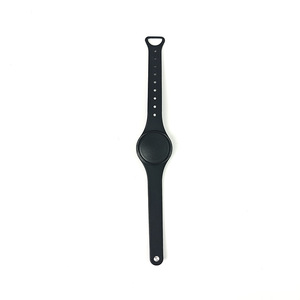
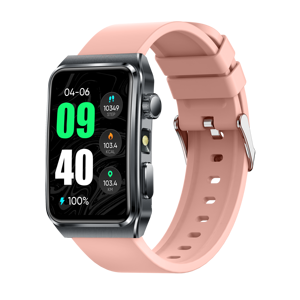
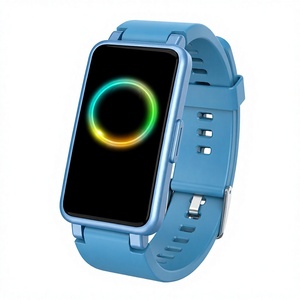
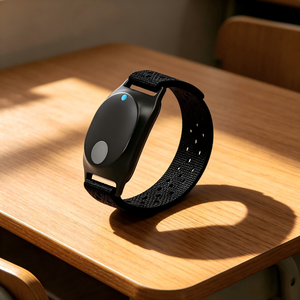
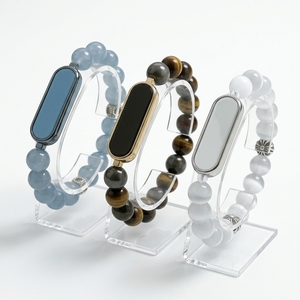
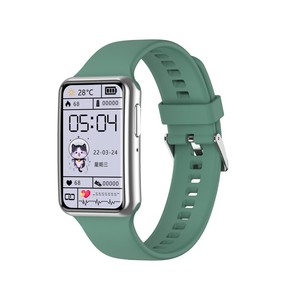
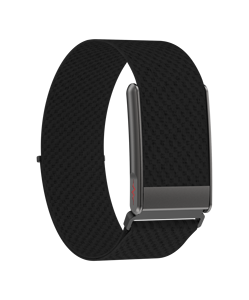
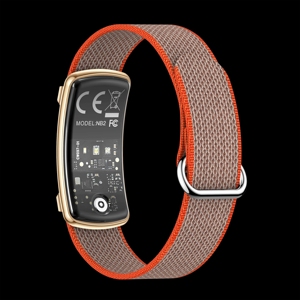
The global wearable safety market for children, teenagers, and vulnerable demographics is undergoing a structural transition. As digital security, parental anxiety, and educational policy reform intersect worldwide, the demand for dedicated 4G LTE/5G child tracker smartwatches—free from internet browsers and addictive social media algorithms—has accelerated at an unprecedented compound annual growth rate (CAGR) of 16.4%. China's industrial hardware hubs in Shenzhen, Dongguan, and Huizhou serve as the undisputed global epicenter for child tracker production, controlling over 78% of international OEM and ODM supply chain outputs.
For international procurement directors, telecom operators (MVNOs), consumer electronics distributors, and medical alert brands, selecting a manufacturing partner in China extends far beyond unit costs. It demands an rigorous audit of hardware architecture, RF antenna design, multi-constellation GNSS positioning accuracy, firmware security, COPPA/GDPR data privacy standards, and automated high-throughput SMT (Surface Mount Technology) assembly capabilities. This white paper delivers actionable technical insights and market analysis to guide enterprise buyers through the critical parameters of sourcing child safety smartwatches and health bracelets directly from leading Chinese factories.
Core Industry Paradigm Shift: Modern child safety trackers are no longer mere "smartwatches." They have evolved into specialized, non-distracting cellular lifelines equipped with encrypted dual-way video calling, multi-constellation GPS/LBS/Wi-Fi positioning, real-time fall detection algorithms, and remote physiological vitals monitoring.
When evaluating Chinese smartwatch suppliers, procurement teams must assess hardware specifications across four foundational technical pillars that dictate real-world reliability and safety compliance:
Unlike adult smartwatches that rely heavily on Bluetooth smartphone pairing, child trackers act as standalone mobile terminals requiring dedicated eSIM or Nano-SIM connectivity. Top-tier Chinese manufacturers utilize energy-efficient LTE Cat-1 bis and Cat-4 cellular basebands from industry leaders such as UNISOC (e.g., 8521E / 8910DM) and ASR Microelectronics. These platforms support worldwide 4G frequency band configurations (including FDD-LTE Bands B1/B2/B3/B4/B5/B7/B8/B12/B17/B20/B28/B66 and TDD-LTE Bands B38/B39/B40/B41), enabling seamless roaming across North American networks (AT&T, T-Mobile), European carriers (EE, Vodafone, Deutsche Telekom), and Asia-Pacific operators.
Positioning accuracy in dense urban canyons, indoor school grounds, and rural environments requires a multi-sensor hybrid positioning engine. Leading Chinese factories integrate multi-constellation GNSS chips capable of processing signals simultaneously from GPS (USA), GLONASS (Russia), and BeiDou (China), coupled with indoor Wi-Fi MAC address scanning and LBS cell tower triangulation. High-end models feature custom kalman-filtering algorithms to reduce location drift to less than 3 meters in outdoor settings, triggering automated geo-fence exit alerts within seconds.
A major procurement criterion for Western markets (US, EU, UK, Australia) is school compliance. School districts increasingly ban standard smart devices due to distraction and cyberbullying risks. Tier-1 manufacturers solve this by offering custom RTOS (Real-Time Operating System) or locked Android OS builds engineered without web browsers, social media apps, or open app stores. Firmware features include restricted whitelist-only contact books, automated class-time lock modes, silent remote audio/photo check-ins for emergency verification, and one-press SOS panic dialing loops that sequentially cycle through emergency contacts until answered.
Child wearables must withstand severe mechanical stress, dust, hand washing, heavy rain, and active play. Premium factories employ liquid silicone rubber (LSR) injection molding, double-o-ring sealing gaskets, and sonic welding to achieve certified IP67, IP68, or 5ATM ingress protection. Furthermore, skin-contact components—such as wrist straps and bottom cases—must strictly comply with EU REACH standards and ISO 10993 biocompatibility testing to guarantee zero cytotoxic or allergic reactions.
To assist strategic sourcing managers in comparing manufacturing models across Chinese suppliers, the technical matrix below details key capabilities from standardized contract factories to specialized ODM R&D hubs:
| Evaluation Metric | White-Label Assembly Plants | Tier-1 OEM/ODM Manufacturing Hubs | Custom R&D Hardware Labs |
|---|---|---|---|
| Typical MOQ (Minimum Order) | 500 – 1,000 units | 1,000 – 3,000 units | 5,000+ units |
| Cellular Chipsets Used | Generic 2G/3G or Basic BLE | UNISOC 8521E / ASR Cat-1 Bis | Custom Qualcomm / Nordic / UNISOC |
| Global Carrier Certification | Self-declared CE/FCC | FCC, CE, RoHS, REACH, PTCRB, GCF | Carrier-specific (AT&T, T-Mobile approved) |
| White-Label App Support | Shared 3rd-party public app | Custom iOS/Android App (Private Cloud) | Full API/SDK PaaS Server Integration |
| Vitals & Health Sensors | Basic pedometer only | PPG Heart Rate, SpO2, Body Temp, Fall Alert | Medical-grade ECG / Advanced AI Health |
| Lead Time (Production) | 15 – 20 Days | 25 – 35 Days | 45 – 60 Days (includes toolings) |
Leading Chinese wearable manufacturers—exemplified by advanced production frameworks seen in brands like Angel Watch and Jaiguru Tech OEM ecosystem partners—offer unparalleled advantages to global procurement partners:
Forward-thinking purchasing directors must align their product roadmaps with upcoming technological advancements shaping the next decade of child and senior safety wearables:
Next-generation devices leverage edge AI to learn a child's daily travel patterns, automatically identifying safe routines and flagging abnormal location anomalies without manual boundary setup.
Innovations in anode chemistry allow 800mAh+ capacity in ultra-compact 14mm profiles, extending typical 4G video-calling standby runtime from 1.5 days to over 4 full days per charge.
Convergence of child trackers and senior medical wearables. Integration of non-invasive body temperature monitoring, PPG heart rate, SpO2 oxygen saturation, and fall alert sensors on universal hardware chassis.
Suppliers are shifting from public shared servers to dedicated localized AWS/Azure private cloud environments, offering brands turnkey white-label iOS/Android app customization with full data ownership.
Direct answers from tier-1 engineering and export sales specialists regarding customization, minimum orders, network compatibility, and quality control.
For standard factory-ready models with logo silkscreening and customized packaging, MOQs usually start at 500 to 1,000 units. For complete OEM customization—including custom injection mold colors, unique UI themes, pre-installed SIM cards, and dedicated white-label iOS/Android applications—MOQs generally start at 2,000 to 3,000 units.
Top manufacturers produce region-specific motherboard variants (e.g., North American Version, European/Asian Version, Latin American Version) tuned with distinct RF modem modules and antenna layouts. Procurement teams can select modem configurations matching local carriers such as AT&T, T-Mobile, Verizon (VoLTE), EE, Vodafone, Claro, and Movistar.
Yes. Leading Tier-1 OEM suppliers offer full white-label app customization. This includes rebranding the mobile app (iOS App Store and Google Play), configuring private push notification services (Firebase / APNs), connecting the backend to your proprietary cloud servers, and customizing the device UI branding.
To import into North America, devices must hold FCC ID certification (Parts 15B, 22, 24, 27) and PTCRB carrier approval. For the European Union, CE-RED (Radio Equipment Directive), RoHS, and REACH chemical safety compliance certificates are mandatory. High-grade suppliers provide complete lab test documentation from accredited inspection bodies (SGS, TÜV, Intertek).
Reliable factories enforce 100% inline vacuum pressure testing before and after final casing assembly. Sample batches undergo immersion testing in 1.5-meter deep water tanks for 30 minutes, followed by high-temperature steam testing to verify seal integrity under thermal expansion.
Existing stock samples can be dispatched via international air express (DHL/FedEx/UPS) within 3 to 5 business days. Custom OEM prototype samples with customized firmware typically require 10 to 14 days. Full-scale mass production lead time is generally 25 to 35 calendar days upon deposit approval and artwork confirmation.
Request our comprehensive 2026 OEM/ODM Product Catalog, hardware pricing tier schedules, and complete technical documentation directly from our export sales division.