Factory-direct OEM/ODM hardware portfolio engineered for medical telecare, nursing homes, and eldercare brands.
Alzheimer's disease and related dementias represent one of the most critical healthcare challenges of the 21st century. According to World Health Organization (WHO) data, over 55 million people worldwide live with dementia, a number projected to reach 78 million by 2030. Among these individuals, approximately 60% will experience at least one episode of spatial disorientation or "wandering," which poses severe risks of injury, hypothermia, or mortality if the individual is not located within the critical 2-hour window.
As global healthcare systems shift toward decentralized eldercare and "Aging in Place" models, enterprise buyers—including telecare providers, national healthcare authorities, nursing home chains, and B2B distributors—are moving away from legacy passive RF trackers toward intelligent, multi-sensor IoT wearables manufactured in China's premier electronic technology hubs.
Core Industry Paradigm Shift: Modern B2B procurement for dementia tracking solutions has evolved from simple GPS locator tags into multi-layered telecare platforms incorporating hybrid positioning (GPS+Wi-Fi+LBS+BLE), predictive fall detection, non-invasive continuous bio-monitoring, and zero-distraction UX architecture.
Integration of GNSS (GPS + GLONASS + Beidou), Wi-Fi MAC Address Sniffing, LBS Cellular Triangulation, and Bluetooth 5.2 Beacons. Ensures seamless transition between outdoor tracking and multi-story indoor localization.
Using 6-axis MEMS sensor fusion (3D Accelerometer + 3D Gyroscope) trained on neural networks to distinguish between accidental falls, sudden sitting, or bedtime movements with over 99.4% accuracy.
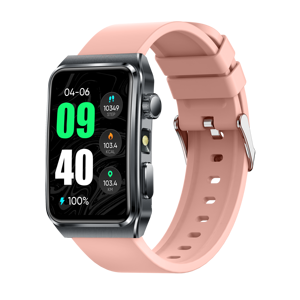
Embedded optical PPG sensors measure Heart Rate (HR), Pulse Oximetry (SpO2), Blood Pressure (BP estimation), and Skin Surface Temperature to detect physiological distress before wandering incidents occur.
When selecting a manufacturing partner in China for dementia tracking hardware, enterprise procurement officers must look beyond initial Unit Purchasing Cost (UPC). Sourcing success relies on analyzing technical capabilities, compliance certifications, cloud infrastructure compatibility, and customization flexibility.
With 2G and 3G networks fully decommissioned across North America, Europe, and major East Asian territories, top China dementia tracker manufacturers have completely migrated hardware architectures to low-power 4G LTE Cat-1 and 5G RedCap (Reduced Capability). Cat-1 technology provides optimal network coverage, ultra-low power consumption, and native support for HD VoLTE voice calls and video check-ins without requiring expensive 5G NR chipsets.
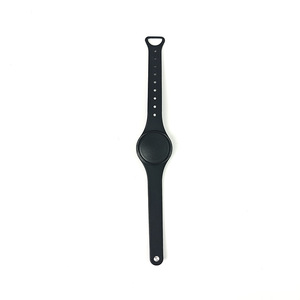
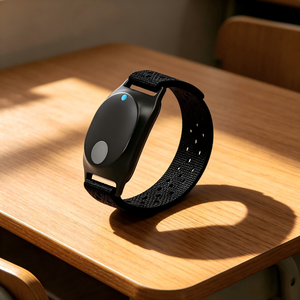
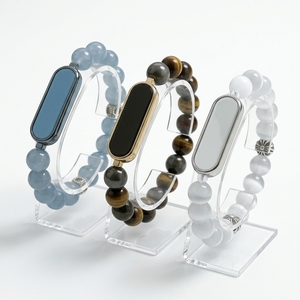
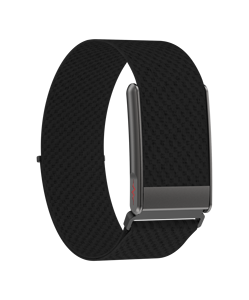
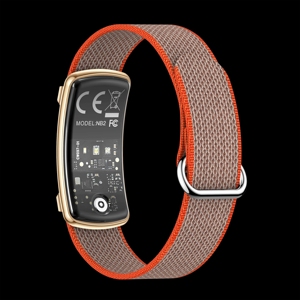
A persistent operational challenge in dementia care is patients removing or discarding tracking devices due to sensory overload or cognitive impairment. Leading OEM suppliers in China now offer specialized hardware modifications:
Global telecare brands require seamless integration with their proprietary hospital databases or senior care ERP systems. Top manufacturers provide complete open API documentation, MQTT/HTTP protocol bridging, and customizable iOS/Android App SDKs for localized cloud server deployment (AWS, Azure, or private enterprise servers compliant with HIPAA and GDPR).
| Architecture Feature | Consumer Fitness Bands | Basic GPS Senior Watches | Enterprise Medical-Grade Dementia Trackers |
|---|---|---|---|
| Primary Network | Bluetooth Only | 2G / 3G / 4G Standard | 4G LTE Cat-1 / 5G RedCap + VoLTE |
| Positioning Precision | N/A (Phone Dependent) | Outdoor GPS (10m - 50m) | Hybrid GPS+Wi-Fi+LBS+BLE (< 2.5m accuracy) |
| Wandering Geo-Fencing | Basic Proximity Alert | Static Circular Radius | Dynamic Multi-Polygon & Safe Corridor Geofencing |
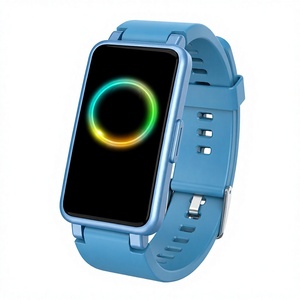
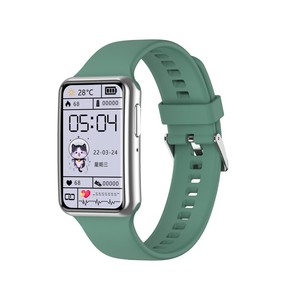
| Sensor Integration | Basic Step Count | Heart Rate / SOS Button | 6-Axis MEMS Fall Detection + HR + SpO2 + Temp + PPG |
| Strap Security | Standard Buckle | Standard Silicone | Anti-Tamper Lock / Cut-Alert Conductive Mesh Options |
| Cloud & SDK Support | Proprietary App Only | Closed Server | Full Open API / MQTT / AWS SDK & Private Deployment |
China's Pearl River Delta (Shenzhen, Dongguan, Huizhou) remains the world's premier manufacturing ecosystem for medical wearables and smart safety equipment. Partnering directly with established OEM/ODM manufacturers provides B2B clients with distinct strategic and financial advantages.
From initial ID design, structural tooling, PCB layout engineering, firmware customization (haptic patterns, voice prompts), to custom packaging and branding.
Factories operating under ISO 9001 and ISO 13485 quality management systems, providing CE, FCC, RoHS, REACH, and SAR compliance testing for global market entry.
Direct component sourcing from tier-1 chipmakers (Nordic, Realtek, UNISOC, MTK), ensuring stable long-term chip availability, lower BOM costs, and rapid production scaling.
Below are essential questions addressed by our senior technical director for international distributors, healthcare agencies, and OEM buyers evaluating dementia safety trackable hardware.
Dementia trackers are specifically engineered to address cognitive impairment challenges. They feature screenless or distraction-free interfaces to prevent user confusion, automated fall-detection sensors, multi-mode indoor/outdoor hybrid positioning (including BLE beacon support for nursing facilities), anti-tamper locking bands, and customized firmware that prioritizes continuous background location transmission and vital monitoring over social applications.
Battery optimization is achieved through intelligent power-mode management in firmware. Devices utilize low-power 4G Cat-1 modules, ultra-low-power BLE sensor hubbing, dynamic GPS sampling intervals (e.g., switching from 1-minute tracking during movement to periodic heartbeats when stationary via accelerometer motion detection), and high-energy-density lithium-polymer battery cells, achieving 3 to 7 days of continuous operational runtime.
Yes. Our enterprise hardware supports open communication protocols (MQTT, HTTP/HTTPS, TCP/UDP). We provide complete API/SDK documentation, allowing your software engineering team to point the wearable device directly to your IP servers or cloud infrastructure (AWS, Microsoft Azure, Google Cloud, or self-hosted HIPAA/GDPR servers).
Standard off-the-shelf wholesale orders typically start at low MOQs (50–100 units). Custom logo printing, custom packaging, and custom app branding usually require an MOQ of 500–1,000 units. Full ODM hardware development (custom plastic molds, specialized PCB layouts, proprietary sensor integration) is subject to engineering review and project scope.
Our 4G devices are available in regional module configurations or full global frequency spectrum models covering North America (B2/B4/B5/B12/B13/B14/B66/B71), Europe/Asia/Africa (B1/B3/B5/B7/B8/B20/B28/B38/B40/B41), and South America. We work with buyers to pre-select modules compatible with local SIM operators (AT&T, T-Mobile, Vodafone, EE, Orange, Telstra, etc.).
Manufacturing facilities adhere to ISO 9001 and ISO 13485 standards. Every unit undergoes 100% automated optical inspection (AOI), SMT circuit testing, RF radio-frequency tuning, IP67/IP68 pressure testing, drop testing, and battery cycle burn-in before shipment. Full certification packages (CE, FCC, RoHS, MSDS, UN38.3 transport reports) are provided for smooth customs clearance.
Ready to launch your brand's next-generation dementia tracking solution or upgrade your senior care telecare infrastructure? Contact our engineering and OEM sales team today for product datasheets, sample orders, and customized quotes.