
CE / BLE 4.2
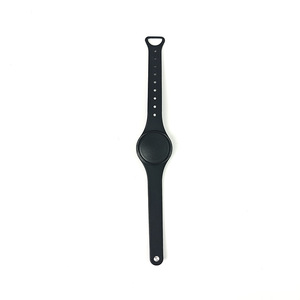
BT Smart Band YK10B861 Fashion Simple Round Watch
- BLE 4.2 long-range 70m telemetry
- Waterproof ergonomic casing
- Low-latency bio-syncing
Engineered for hospital remote patient monitoring (RPM), eldercare facilities, and personal telemetry. Explore our CE-compliant OEM smart bands equipped with multi-spectrum photoplethysmography and real-time alert architecture.
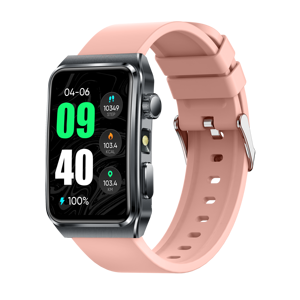
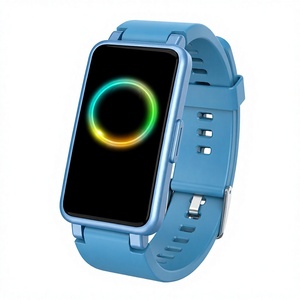
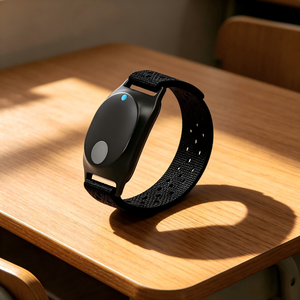
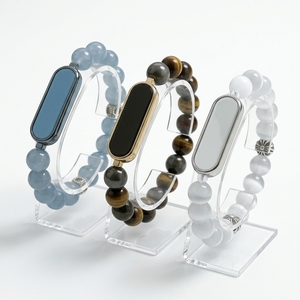
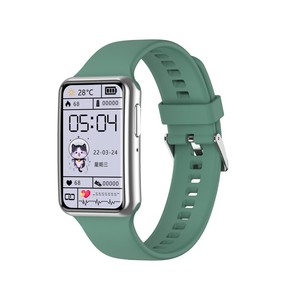
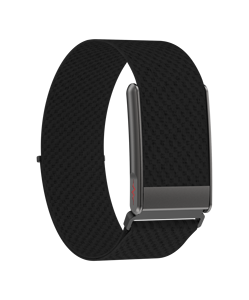
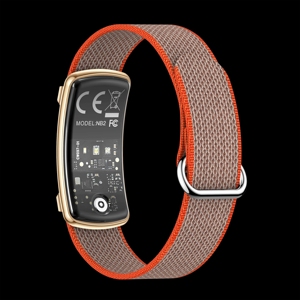
Operating under strict ISO 13485 quality management systems, our facility combines automated surface-mount technology (SMT) with rigorous optical calibration to deliver high-yield, CE-compliant wearable devices.
All vital monitoring bands undergo rigorous Electromagnetic Compatibility (EMC) testing and medical device safety evaluations, ensuring full market authorization across European economic zones.
Supporting low-power 4G LTE, NB-IoT, and BLE 5.2 transmission, our devices push vital metrics directly to cloud-based hospital EHR platforms and Remote Patient Monitoring portals.
From white-label iOS/Android SDKs to custom sensor thresholds and bio-silicone mold design, we offer complete hardware and software tailorship for enterprise clients.
The global remote patient monitoring (RPM) landscape is undergoing a paradigm shift from basic consumer-grade step counting to continuous, bio-clinical telemetry. As healthcare systems cope with aging demographics and chronic disease burdens, the demand for CE-certified wearable vital monitors capable of hospital-grade precision has escalated exponentially. Modern vital monitoring devices are no longer mere accessories; they are vital diagnostic endpoints in decentralized clinical trials and home-based care protocols.
Key to this evolution is the integration of multi-wavelength Photoplethysmography (PPG) sensor arrays combined with micro-electro-mechanical systems (MEMS) accelerometers. By capturing green, red, and infrared light absorption profiles through capillary beds, advanced smart bands can compute continuous peripheral oxygen saturation (SpO2), heart rate variability (HRV), arterial stiffness indexes, and non-invasive continuous blood pressure estimations without inflatable cuffs.
Clinical Insight: Multi-spectrum optical PPG algorithms now compensate for skin tone variations, ambient motion artifacts, and low microvascular perfusion, enabling CE-certified smart bands to achieve a correlation coefficient of r > 0.98 against clinical electrocardiograms (ECG).
Next-generation vital monitors incorporate microcontrollers equipped with dedicated Neural Processing Units (NPUs). Rather than streaming raw, bandwidth-heavy sensor data to cloud servers, these edge-AI chips execute real-time digital signal processing (DSP) directly on the device. Algorithms filter out motion noise generated during physical activity, instantly detecting cardiac arrhythmias (such as Atrial Fibrillation), sudden arterial desaturation, and anomalous body temperature spikes.
Furthermore, bio-impedance sensors (BIA) embedded into smart bracelet contacts allow for real-time galvanic skin response (GSR) analysis and hydration tracking. When integrated with deep-learning sleep architecture models, these devices segment sleep stages (Deep, Light, REM, Awake) with precision comparable to laboratory polysomnography (PSG).
Battery longevity remains a vital procurement metric for institutional buyers. Recent advancements in low-power wireless protocols—specifically Bluetooth Low Energy (BLE 5.3), Narrowband IoT (NB-IoT), and LTE-M—have drastically reduced operational microamp consumption. Screenless vital monitor designs, such as stealth health bands, can operate for up to 21 consecutive days on a single charge while continuously transmitting 24/7 telemetry logs to medical gateways.
| Telemetry Protocol | Power Consumption | Data Throughput | Primary Healthcare Application | Regulatory Target |
|---|---|---|---|---|
| BLE 5.2 / 5.3 | Ultra-Low (< 5mA peak) | 2.0 Mbps | Pairing with Smartphone / Medical Hubs | CE Class IIa / FDA 510(k) |
| NB-IoT / LTE-M | Low-Medium (Adaptive) | 64 – 250 kbps | Direct-to-Cloud Senior Safety & RPM | CE Medical Directive compliant |
| Standalone 4G LTE | Moderate (High Duty) | 10 Mbps | Voice Call SOS + Live Emergency Tracking | CE / RED Directive certified |
| Dual-Band Wi-Fi | High (Burst mode) | 54 Mbps | In-Hospital Ward Telemetry Syncing | ISO 13485 Manufacturing |
For medical device distributors, enterprise telehealth platforms, and government procurement officers, sourcing vital signs monitoring hardware requires evaluating parameters far beyond wholesale unit price. Strategic buyers are prioritizing supplier compliance, supply chain transparency, software stack adaptability, and robust data privacy architecture.
Hardware isolation is a relic of the past. Enterprise buyers demand hardware platforms that offer native Software Development Kits (SDKs) for iOS, Android, and web cloud environments. Modern OEM suppliers must provide fully documented RESTful APIs and Bluetooth GATT profile specifications, empowering healthcare providers to ingest raw photoplethysmogram data, inter-beat intervals (IBI), and skin temperature logs directly into their proprietary electronic health record (EHR) platforms without third-party vendor lock-in.
Long-term wearability mandates strict adherence to dermatological safety standards. Leading manufacturers are shifting to medical-grade liquid silicone rubber (LSR), woven hypoallergenic nylon straps, and surgical-grade 316L stainless steel sensors. Materials must undergo rigorous ISO 10993 testing for cytotoxicity, sensitization, and intracutaneous reactivity to prevent skin irritation during extended patient monitoring.
Regulatory Advisory: Devices intended for extended contact must comply with EU Regulation 2017/745 (MDR) and REACH/RoHS environmental chemical directives. Non-compliant plastics risk immediate customs seizure and market recall within European jurisdictions.
As wearable vital monitors become network connected, data security is paramount. European procurement protocols stipulate end-to-end encryption (AES-128/256 bit) for all transmitted biometric data. Suppliers must implement secure bootloaders to prevent firmware tampering, ensuring that over-the-air (OTA) software updates do not expose telemetry networks to unauthorized interception.
Detailed answers regarding regulatory compliance, OEM customization capabilities, manufacturing minimum order quantities (MOQ), and sensor validation protocols.
Our vital monitor series complies with the European Union Medical Device Regulation (EU MDR 2017/745) and holds CE certification under the Radio Equipment Directive (RED 2014/53/EU). Complete Declaration of Conformity (DoC) documents, test reports for EN 60601-1 medical electrical safety, and EN 60601-1-2 EMC reports are supplied with commercial procurement packages.
Yes. As a primary manufacturer, we support complete OEM/ODM solutions. This includes silk-screen logo printing, custom enclosure colorways, tailored packaging boxes, bootup logo displays, custom vibration alert profiles, and deep firmware modification to support custom Bluetooth GATT server profiles for seamless API integration.
Our multi-wavelength optical sensors achieve an SpO2 accuracy root-mean-square error (ARMS) of ≤ 2% within the 70%–100% saturation range when validated against arterial blood gas (ABG) reference values. Heart rate monitoring accuracy maintains a deviation within ± 1 bpm under static conditions and ± 3 bpm during vigorous dynamic movement.
We provide comprehensive mobile SDKs (Swift/Objective-C for iOS, Java/Kotlin for Android) alongside native BLE communication protocols. Developers can extract real-time step counts, continuous pulse intervals, continuous body temperature measurements, and SpO2 readings directly into third-party Remote Patient Monitoring (RPM) software.
Screenless models (such as the 2026 Stealth Vital Tracker) offer up to 21 days of continuous standby power with 24/7 background telemetry logging. Color screen models (such as TK73 or C6 Plus) provide 5 to 7 days of typical operational battery life. All devices utilize magnetic fast-charging contacts with over-voltage and thermal protection circuits.
Standard catalog products carry a low sample MOQ of 50 units for evaluation. Full OEM brand customization orders start at an MOQ of 1,000 units. Mass production lead times typically range from 15 to 25 business days depending on custom firmware requirements, backed by insured global freight forwarding.
Request our comprehensive product catalog, complete regulatory compliance dossiers, and wholesale OEM pricing matrix today. Speak directly with our senior bio-telemetry engineering team.
Get Catalog