Why Choose a 4G LTE Wearable Mobile Phone for Kids?
A 4G LTE Wearable Mobile Phone for Kids can offer communication without handing over a full smartphone. It usually combines calling, location sharing, emergency contacts, and simple messaging. A child can wear it during the school run, at a park, or while visiting relatives. Parents can check selected information through a companion app. The experience feels more controlled than unrestricted smartphone access.
Ben Wood, Chief Analyst at CCS Insight, has observed, “The value of a wearable is measured by the problem it solves, not by the features it lists.” That principle matters here. A useful kids’ wearable should have clear controls, dependable connectivity, comfortable materials, and a battery that lasts through an ordinary day. It should also make privacy settings understandable. Complicated menus can create mistakes.
Small details matter.
For example, a child may need to press one visible button while standing near a busy playground gate. Parents may need a reliable location update when plans change. These moments show the practical value of LTE connectivity. However, the device is not a magic solution. GPS can become less precise indoors, batteries can run low, and network coverage varies by region. Families still need conversations about safe use, screen habits, and trusted contacts. Choosing well means comparing real daily needs, not chasing impressive specifications. That honest approach supports safer, more responsible connected technology for children.
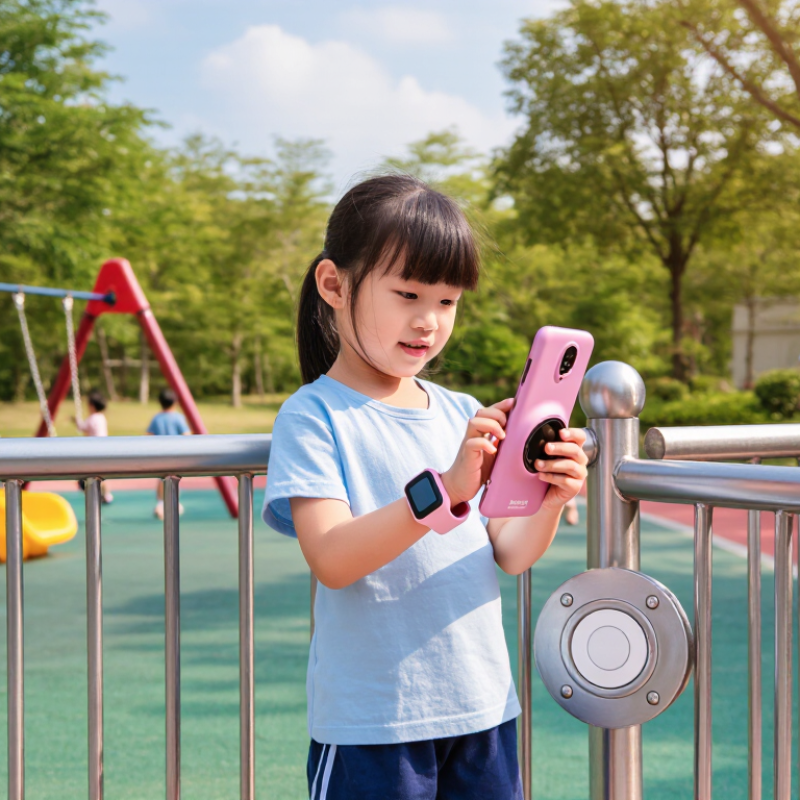
A 4G LTE wearable mobile phone for kids is a small communication device worn on the wrist. It uses a cellular network, so children can call or exchange messages without carrying a full-sized smartphone. Many models include GPS location sharing, voice calls, approved contacts, and an emergency button. The exact features depend on the device and local network support.
In daily use, the watch can feel practical during school trips, park visits, or walks home. A parent may check the child’s location from a companion application. The child can press one button when plans change. That sounds simple.
Setup requires careful attention. Parents should confirm network coverage, battery life, contact permissions, and school policies. Location information also needs respectful handling. Children should understand who can view it and why. A wearable phone is not a replacement for supervision, judgment, or emergency services. Some location readings may be delayed near tall buildings or indoors. The battery may also drain faster with frequent calls or tracking. That part is easy to overlook.
From a safety and usability perspective, fewer functions can be helpful. A limited contact list reduces distractions and unfamiliar communication. However, parents should test the device before relying on it. Make a call, check the location, and charge it overnight. I still think the technology can encourage independence, but it may create false confidence if adults stop checking in.
4G LTE provides a stronger data foundation for calls, location sharing, messaging, and safety features on a wearable phone.
The chart compares representative theoretical peak downlink speeds across mobile network technologies. LTE supports substantially higher data rates than earlier generations, helping connected wearables deliver more responsive communication and location-based services. Actual performance depends on network coverage, device hardware, and local conditions.
A 4G LTE wearable mobile phone gives children a direct communication channel without requiring a full-sized smartphone. With LTE, voice calls and messages can remain usable during school trips, walks, or crowded public places.
GSMA Intelligence reported that 4G covered approximately 90% of the global population in 2023. That reach matters when families travel beyond familiar Wi-Fi networks.
Unlike Wi-Fi-only devices, an LTE wearable can use cellular networks for two-way contact. A child can call a stored family number, while a parent receives a quick response. Small details help: a physical call button, audible vibration, and readable contact names.
These numbers show how deeply connected communication has become.
However, reliable communication requires more than network access. Parents should check local LTE coverage, battery performance, contact controls, and privacy settings.
The GSMA’s State of Mobile Internet Connectivity report highlights affordability, digital skills, and network quality as continuing barriers. A wearable may reduce those barriers, but it cannot solve every family concern.
Location sharing can support coordination, yet excessive monitoring may weaken trust. That tension deserves honest discussion.
Children also need practice answering unfamiliar calls safely and explaining when they need help.
A 4G LTE wearable mobile phone can give parents practical contact and location support. Children can call approved contacts without carrying a full-sized smartphone. The wrist-based design is easier to notice during school travel, park visits, or family outings. Parents may also receive location updates through GPS, cellular positioning, or nearby Wi-Fi signals. Accuracy can change indoors, near tall buildings, or in crowded areas.
Safety features matter more than flashy extras. A parent-managed contact list can reduce calls from unknown numbers. One-touch emergency calling helps a child reach a trusted adult quickly. Some devices offer geofencing alerts when a child leaves a selected area, such as a school route. Voice messages and check-in prompts can also reduce repeated calls. However, location tracking is not perfect. Parents should explain when tracking is used and review privacy settings regularly. Trust still matters.
Tips: Test the device near home before relying on it elsewhere. Confirm battery life after several location checks. Teach the child how to call, mute, and respond to an emergency prompt. Keep the contact list short and current. Avoid treating the map as absolute proof of location. Signal gaps happen. Also check whether the service stores location history, who can access it, and how long records remain available. A simple family safety plan can cover situations the device cannot.
Why Choose a 4G LTE Wearable Mobile Phone for Kids?
A 4G LTE wearable mobile phone can give a child limited freedom without handing over a complex smartphone. Its wrist-based design keeps calling, messaging, and approved contacts close during a walk, school trip, or family outing. That physical simplicity matters. Children can press a visible button, follow large icons, and hear clear prompts. Fewer menus mean fewer chances to get lost. However, LTE availability and call quality depend on local network coverage.
Independent use grows through repeated, low-pressure practice. A parent might begin with two contacts and one check-in routine. Later, the child can start a call, answer a voice message, or share a location when appropriate. These small tasks build confidence because the child acts, rather than waiting for an adult. Voice and tactile controls can help younger users, especially when their hands are cold or carrying a schoolbag. Still, independence is not the same as unlimited access. Adults should review contact permissions, location settings, battery status, and privacy choices.
In practical use, the watch may feel reassuring, but it can also create false confidence. A weak signal, forgotten charging, or unclear audio can interrupt a planned check-in. That matters. Children need a backup rule, such as staying with a trusted adult or returning to a known meeting point. Caregivers should explain when tracking is used and respect the child’s growing privacy. Some children adapt quickly; others need weeks of practice.
| Design or Usage Dimension | Typical 4G LTE Wearable Capability | How It Supports Independent Use | Practical Consideration |
|---|---|---|---|
| Mobile connectivity | 4G LTE enables voice calls, messaging, and mobile data where compatible network coverage is available. | Children can contact approved people without needing Wi-Fi or a nearby smartphone. | Actual service depends on network coverage, SIM activation, local frequency bands, and subscription availability. |
| Wearable form factor | The device is worn on the wrist, keeping communication functions physically attached to the child. | A child is less likely to misplace it and can access key functions without carrying a separate phone. | The strap and case should be correctly sized and comfortable for extended wear. |
| One-touch calling | Many child-focused wearable phones provide dedicated or simplified contact buttons. | Children can initiate a call using fewer steps, reducing dependence on an adult for routine communication. | Caregivers should configure and test permitted contacts before use. |
| Emergency communication | A configured emergency function may call or message selected contacts, depending on the device and service plan. | A clearly identified control can help a child request assistance quickly. | An emergency feature is not a substitute for local emergency services or adult supervision. |
| GPS location support | Consumer GNSS positioning is commonly accurate to approximately 3–10 metres outdoors under open-sky conditions, but performance varies. | Location sharing can help caregivers coordinate pickups and check a child’s approximate location. | Indoor areas, tall buildings, weather, satellite visibility, and cellular service can reduce accuracy. |
| Simple user interface | Large icons, limited menus, touch controls, and visual prompts are commonly used in child-oriented designs. | Fewer choices make routine actions easier to learn and remember. | Interface accessibility depends on screen size, icon clarity, language settings, and the child’s age. |
| Battery endurance | Typical usage can range from roughly one to several days, depending on battery capacity, network strength, GPS use, screen time, and calling frequency. | Reliable battery life reduces interruptions during school, travel, and after-school activities. | Frequent location updates and weak cellular signals can increase power consumption. |
| Water and dust resistance | Some models use an IP rating; for example, IP67 indicates dust protection and temporary immersion in up to 1 metre of water for up to 30 minutes under laboratory conditions. | Greater resistance helps the device remain usable during everyday play and accidental splashes. | An IP rating does not guarantee protection from seawater, hot water, impact, or damage caused by wear. |
| Contact controls | Caregiver-managed contact lists can limit calling and messaging to approved people. | Children can communicate independently while adults retain control over the contact list. | Settings should be reviewed regularly as family, school, and care arrangements change. |
| Reduced distraction | A wearable phone can focus on calling, messaging, location, and safety functions instead of offering the full app ecosystem of a smartphone. | The child can practise communication and basic responsibility with fewer entertainment distractions. | Actual distraction levels depend on the device’s operating system and enabled features. |
| Learning responsibility | Daily tasks may include charging, wearing the device correctly, answering calls, and using agreed emergency procedures. | These repeated routines help children develop practical independence while maintaining caregiver oversight. | Clear family rules and periodic practice are important for safe and confident use. |
Note: Specifications and performance vary by device, network, region, environment, and service plan. Check the product’s technical documentation before purchase.
Why Choose a 4G LTE Wearable Mobile Phone for Kids?
Families should examine daily needs before choosing a 4G LTE wearable mobile phone for kids. Check local network coverage, not only the advertised signal strength. A watch may support 4G, yet perform poorly indoors or in rural areas. Battery life also matters. Frequent charging can become frustrating before school. Look for clear call quality, simple controls, and a comfortable strap that fits small wrists. Water resistance and impact protection are useful for playgrounds, but neither makes a device indestructible.
Parents should review location features carefully. Real-time tracking can support safer routines, but it also creates privacy responsibilities. Choose adjustable permissions, secure account access, and transparent data practices. Emergency contacts should be easy to reach without encouraging unnecessary calls. Consider whether the device works independently or requires a nearby phone. Monthly service fees, replacement costs, and charging habits can change the real budget. A lower purchase price may not stay lower.
Tips: Test the device near your child’s school, home, and usual travel routes. Ask the child to make a call and use the emergency function. Check whether they can read the screen in sunlight. Keep contact lists short. Explain when location sharing is appropriate. Do not assume every feature improves safety. Some children may feel watched, while others may forget the device entirely. No checklist is perfect; families should review their choice after a few weeks of real use.
It is a small wrist device using cellular networks for calls, messages, and selected safety features. It is not a full smartphone.
Children can call approved contacts during trips, walks, or changing plans. A physical button and audible vibration can make contact easier. Keep it simple.
Yes, it can use a supported cellular network instead of nearby Wi-Fi. Coverage may weaken indoors, in rural areas, or near tall buildings.
Many devices share location through a companion application. Readings may arrive late, so location sharing should support supervision, not replace it.
Check network coverage, battery life, call quality, contact controls, privacy settings, and monthly service costs. Test the device near school and home.
Explain who can view the location and why. Use limited permissions and secure account access. Constant checking may weaken trust.
Families should review school rules before activation. Some schools may restrict calls, messages, or tracking during lessons.
The device does not replace judgment, supervision, or emergency support. Children should practice answering unfamiliar calls safely. Technology can create false confidence.
A 4G LTE Wearable Mobile Phone for Kids is a compact communication device designed to help children stay connected without carrying a traditional smartphone. Using 4G LTE networks, it can support voice calls, messaging, and, where available, basic data services with reliable coverage. Its wearable design, often attached to the wrist, makes it easy for children to access essential functions while reducing the distractions associated with larger smart devices.
For parents, these devices may offer useful safety and location features, such as GPS positioning, approved-contact lists, emergency calling, and alerts when a child leaves a designated area. They can also encourage gradual independence by allowing children to communicate with trusted family members while maintaining parental oversight. Before choosing one, families should consider network compatibility, battery life, durability, comfort, privacy controls, subscription costs, location accuracy, and whether the available features match the child’s age and daily needs.