A Quick Release Silicone Smartwatch Band looks like a small upgrade, but it affects comfort, cleaning, and how easily a watch adapts to daily routines. The market context is growing: Grand View Research valued the global smartwatch market at $33.58 billion in 2023 and projected an 8.9% compound annual growth rate through 2030. IDC also reported 534.6 million wearable-device shipments worldwide in 2024, a 6.1% increase from 2023. These figures describe the broader category, not demand for any particular band. Still, they show why practical accessory choices matter to many owners.
The best band is not automatically the softest or the cheapest. It should fit the exact watch model, use a secure quick-release connection, and feel comfortable against skin during movement. Silicone is easy to wipe after a workout, though some designs can feel warm or collect lint. Small details count: a spring bar that slides smoothly, a buckle that does not pinch, and strap holes that allow a stable fit. There is no perfect pick. That is worth admitting. This guide compares materials, compatibility, comfort, durability, and value, while separating useful specifications from marketing claims. Check the manufacturer’s fit guidance before buying; quick-release mechanisms are not universal, and a poor match can leave a costly watch feeling less secure.
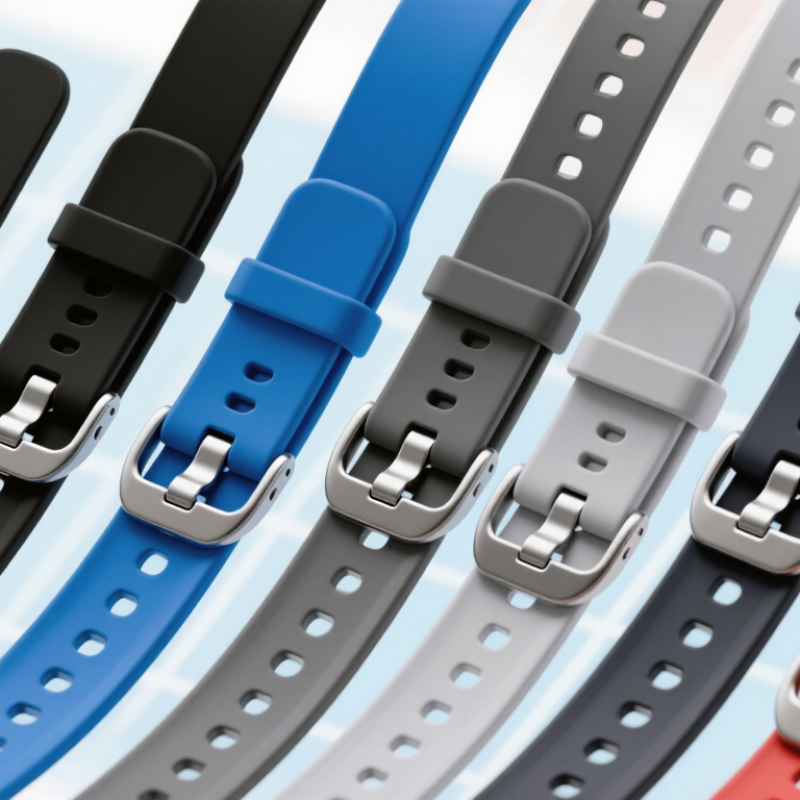
A quick-release silicone band combines a flexible strap, two spring bars, and small sliding levers. The silicone rests against the wrist; the bars lock into holes inside the watch lugs. Pulling a lever retracts a bar, so the strap can be removed without a tool. A small click. Check that both bar ends seat fully before wearing the watch. Silicone feels pliable, but dirt can collect around the pin openings, so rinse and inspect those areas regularly.
Measure the gap between the watch lugs, not the strap’s outer edge. Common widths are 18, 20, and 22 mm; the bar length must also match the watch. A 20 mm strap may look close to a 22 mm lug, but it can shift under a firm tug. IDC’s Worldwide Quarterly Wearable Device Tracker reported 506.7 million wearable-device shipments in 2023, down 1.7% year over year. That figure covers devices, not replacement bands, so it cannot predict band demand. It does underline the scale of wearable use, where secure, easy-to-change fittings matter. Fit can still feel imperfect: wrist shape and strap-hole spacing affect comfort more than width alone.
A quick-release silicone band is only convenient when its measurements match the watch. Measure the distance between the inner faces of the lugs, not the outside edges. A digital caliper gives a clearer reading than a soft tape measure. Common widths differ by just a few millimeters, so guessing can leave the band loose or prevent it from fitting. Check the watch’s listed lug width, too. Measurements online can be rounded.
Check the spring bars before wearing the watch. The small release lever should move freely, and both bar tips must settle into the lug holes. You should hear or feel a secure click. No click? Remove the band and inspect the alignment; never force it. Case shape matters as well. Curved lugs, recessed shoulders, or a thick case edge can block the release lever or make the silicone rub against the watch. A band may fit the width but still sit awkwardly. That detail is easy to miss. Test the fit gently, then check that the band pivots without pinching or leaving a visible gap.
What Is the Best Quick Release Silicone Smartwatch Band?
Material Performance: ASTM D412 Tensile Testing and ASTM D2240 Hardness
A quick-release band must flex around the wrist without tearing at its spring-bar opening. ASTM D412 measures tensile strength and elongation at break in rubber-like materials. These results help assess how a silicone sample stretches before failure. ASTM D2240 measures indentation hardness, commonly reported on the Shore A scale. Together, the tests describe useful—but incomplete—parts of band performance.
Silicone compound technical data sheets often report tensile strengths around 5–10 MPa and elongation at break of roughly 200–700%. These broad ranges vary with formulation and specimen preparation; they are not acceptance limits for watch bands. A lab report should state specimen type, conditioning, test speed, and hardness scale. It should also test material from the finished band, especially near the lug slot, where stress concentrates. Small details matter.
For a quick comparison, test samples from the same production lot under identical conditions. A softer Shore A reading may feel comfortable, yet hardness alone cannot predict tear resistance or long-term wear. ASTM D412 and D2240 provide repeatable methods, not a single “best” score. One limitation remains: laboratory coupons do not perfectly reproduce a band’s daily bending and sweat exposure. A practical evaluation should pair standard results with inspection of the actual release connection.
Material Performance: ASTM D412 Tensile Testing and ASTM D2240 Hardness
For a quick-release band, balance flexibility with resistance to pulling and tearing. ASTM D412 measures tensile properties, while ASTM D2240 measures indentation hardness. The plotted values are illustrative examples within commonly encountered silicone ranges—not certified results for a specific material. Actual performance depends on formulation, specimen preparation, and test conditions.
What Is the Best Quick Release Silicone Smartwatch Band?
Skin Contact and Care: What ISO 10993-5 Cytotoxicity Testing Evaluates
A quick-release silicone smartwatch band rests against warm, moving skin for hours. ISO 10993-5:2009 evaluates whether a material or its extract harms cultured cells in vitro. Labs may test extracts or direct contact, depending on the material and test design. The standard’s commonly used decision rule treats a viability drop greater than 30% as a cytotoxic response. In plain terms, fewer than 70% viable cells raises a concern. Useful, but limited.
This result does not prove that a band will cause a rash, nor does a passing result prove comfort. Cytotoxicity testing measures cell damage, not allergic sensitization, irritation, sweat buildup, or friction at a buckle edge. ISO 10993-23:2021 addresses irritation. The FDA’s 2023 guidance on ISO 10993-1 emphasizes evaluation based on contact type and duration. A good test report should identify the sample, test conditions, controls, and results.
For daily care, rinse away sweat and soap, then dry both the band and wrist before fastening again. Give skin brief breaks after long, hot workouts. Check for rough seams, residue, or redness that persists after removal. A smooth feel is not test evidence. Even careful testing has limits: wear conditions vary, and real wrists are not laboratory plates.
A good quick-release silicone band should resist a firm tug without pinching the release pin or shifting on the wrist. Check that the spring bar clicks fully into place, then pull gently from both ends. Small gaps matter. Pew Research Center reported in 2023 that about one in five U.S. adults regularly wear a smartwatch or fitness tracker, so everyday fit affects many people. That figure describes device use, not band quality. For comfort, wear the band for several hours and look for pressure marks, trapped sweat, or a clasp that catches sleeve fabric. Leave enough room for one fingertip beneath the strap; a tight fit can feel worse as the wrist warms.
Water resistance claims need context: a band can handle splashes while the watch itself has different limits. After a sweaty workout or rinse, dry the underside and check for sticky residue or lingering odor. ACSM’s 2024 Worldwide Survey of Fitness Trends ranked wearable technology first for the eighth consecutive year, reflecting its role in routine activity tracking. For a practical wear test, repeat wrist bends, typing, and a brisk walk over several days. Note whether the band loosens, rubs near the buckle, or feels slick when wet. One clean test is not proof; I’d repeat it, because wrist shape and sweat vary.
| Band design | Retention | Comfort | Water exposure | Wear-test checks | Indicative score |
|---|---|---|---|---|---|
| Solid silicone, single pin buckle | Secure when the buckle is fastened correctly and the strap end is tucked through its keeper. Check that the quick-release spring bar is fully seated at both lugs. | Soft and flexible; can feel warm or sticky against skin during prolonged, sweaty wear. | Silicone is generally suitable for routine splashes and wet conditions. Rinse off salt or chlorinated water and dry the skin and band afterward. | Check buckle alignment, keeper movement, spring-bar engagement, and surface cracking after repeated fastening and flexing. | Retention 4/5 Comfort 3/5 |
| Perforated silicone | Usually comparable to a standard buckle design; holes provide adjustment positions. Inspect the edges around holes for tearing. | Airflow and reduced contact area may help during exercise. Hole placement and strap width affect fit. | Water drains more readily through the openings, but moisture can remain between the strap and skin. | Flex the strap around the adjustment holes and inspect for stretching, whitening, or small tears. Check that the buckle pin does not enlarge a hole. | Retention 4/5 Comfort 4/5 |
| Soft, thin silicone | Depends strongly on the buckle and spring bars. A thin strap may feel less stable if it twists or stretches under a firm pull. | Light and pliable, which can suit smaller wrists; may provide less support for a heavier watch case. | Suitable for ordinary water exposure when the band is intact. Allow the underside and wrist to dry after swimming or exercise. | Check for permanent stretching, edge wear, and strap-end slippage after repeated removal and reattachment. | Retention 3/5 Comfort 4/5 |
| Thicker silicone with double keepers | Two keepers help control a loose strap end. Confirm that the buckle pin and both quick-release spring bars fit securely. | More substantial on the wrist; can feel bulky or retain more heat, especially on smaller wrists. | Silicone handles routine wet use well, but the thicker construction may take longer to dry beneath the band. | Check whether the keepers stay in place, whether the strap develops creases, and whether the buckle remains comfortable under wrist movement. | Retention 5/5 Comfort 3/5 |
| Textured or ridged silicone | Retention is primarily determined by the buckle, keeper, and correctly seated spring bars—not by the surface texture. | Texture may reduce broad skin contact, but raised ridges can irritate sensitive skin or collect residue. | Suitable for normal splashes and wet wear; clean grooves regularly and rinse away soap, sweat, and pool water. | Inspect ridges for trapped debris, surface splitting, and wear where the strap bends near the buckle and watch lugs. | Retention 4/5 Comfort 3/5 |
How to interpret the scores: These are indicative design-based ratings, not results from a certified laboratory test. Before buying, verify the watch’s lug width and quick-release spring-bar dimensions. A band’s water suitability does not change the water-resistance rating of the watch itself.
Small spring bars sit inside the watch lugs. Slide the lever to retract a bar, then fit or remove the band. Listen for a click.
Measure between the inner faces of the lugs. Common widths are 18, 20, and 22 mm. A close guess can still leave the band loose.
Confirm both bar tips sit fully in the lug holes. Gently tug the band and check for movement. No click? Remove it and inspect the alignment.
Yes. Curved lugs, a thick case edge, or recessed shoulders may affect the fit. Check for pinching, rubbing, or a visible gap.
Move the release lever and make sure it slides freely. Fit the band without forcing it, then check that it pivots smoothly.
Rinse away sweat and soap, then dry the band and wrist before fastening it again. Dirt can collect around the pin openings. Easy to miss.
It checks whether a material or its extract harms cultured cells under specific test conditions. It does not establish comfort during everyday wear.
No. Cell testing does not measure every cause of irritation, such as friction, sweat, or personal sensitivity. Take breaks after hot workouts and notice any lasting redness.
Choosing the best Quick Release Silicone Smartwatch Band depends on fit, construction, and how it performs during everyday wear. These bands typically use a flexible silicone strap with a small spring-bar pin that slides into the watch’s lugs and can be released without tools. Common widths range from 18 to 22 mm, but matching the lug width alone is not enough: check that the spring bar fits securely and that the watch-case design leaves room for the strap to move freely.
Material and skin-contact information can help you compare options. ASTM D412 tensile testing measures how silicone responds to pulling, while ASTM D2240 measures hardness; neither test alone predicts overall comfort or durability. ISO 10993-5 cytotoxicity testing evaluates whether a material may cause harmful effects to cells under specified laboratory conditions, but it does not guarantee that every wearer will avoid irritation. Compare bands by checking pin retention, flexibility, comfort, and performance after water exposure and repeated wear, and follow the maker’s cleaning and care guidance.