Free Angel Watch™ app · No app subscription · 14-day money-back guarantee
0%

The 2026 Best Water-Resistant Kids Smartwatch Series RS enters a market shaped by growing demand for safer, connected family technology. Grand View Research reports that the global smartwatch market continues expanding, while IDC identifies children’s wearables as part of a wider shift toward health, communication, and location-based services. These reports show opportunity, not automatic quality. A watch that survives rain still needs clear controls, dependable battery life, and responsible data practices.

Water resistance should be explained precisely. The International Electrotechnical Commission’s IEC 60529 standard separates dust protection from water protection through IP ratings. Therefore, “water-resistant” does not necessarily mean suitable for swimming, hot showers, or deep submersion. Tiny details matter: a loose charging cover, wet speaker grille, or cracked seal can change real-world performance. Ramon T. Llamas, an industry analyst associated with IDC’s mobile and wearable research, has said, “Wearables are becoming more personal, more intelligent, and more connected.” That observation fits children’s devices, but it also deserves caution. Intelligence should support parents, not overwhelm children with alerts.

This series review will examine the Water-Resistant Kids Smartwatch Series RS through practical experience, technical specifications, independent testing evidence, and family usability. It will compare communication tools, emergency functions, comfort, battery endurance, and privacy controls. Some claims may remain difficult to verify. That is worth admitting. A cheerful display cannot replace reliable testing, and a polished product page cannot prove daily durability. For 2026, the strongest choice should balance protection, simplicity, and trust.
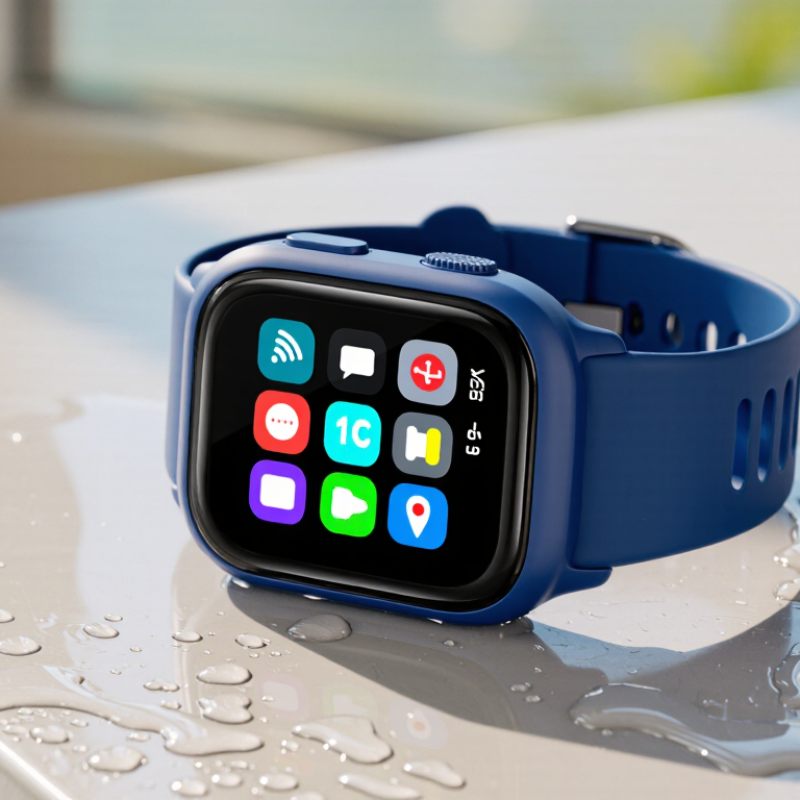
2026 Best Water Resistant Kids Smartwatch Series RS?

What Defines a Water-Resistant Kids Smartwatch in 2026

2026 Best Water Resistant Kids Smartwatch Series RS?

What Defines a Water-Resistant Kids Smartwatch in 2026

A water-resistant kids smartwatch should offer more than a confident label. IP ratings describe protection against dust and water under controlled testing. They do not guarantee safety during every bath, pool visit, or muddy playground adventure. IP67 usually supports brief immersion, while IP68 depends on the maker’s stated depth and duration. Check the actual specification.

A practical design also protects weak points. The charging cover should close firmly, and buttons should resist accidental pressure underwater. A sealed speaker may sound softer after rain. That is normal. Clear voice alerts matter, especially when children wear the watch outside. Skin-contact materials should be tested for comfort, since sweat, sand, and soap can irritate sensitive skin.

Look for a 5 ATM rating only when swimming guidance is clearly provided. This rating represents pressure testing, not permission for deep diving. Water resistance can decline after drops, repairs, heat exposure, or repeated charging-port wear. A rating is not a promise forever. Parents should inspect the seal regularly and dry the watch before charging. I would also avoid trusting automatic water locks completely. Children may forget to activate them. The better question is simple: can the watch handle real daily mistakes, and does its documentation explain the limits honestly?

Key Features of the Series RS for Children

The Series RS is designed for children who move between school, playgrounds, and rainy sidewalks. Its water-resistant case should handle splashes, handwashing, and brief rain exposure. However, water-resistant does not mean waterproof. Parents should check the stated IP rating before allowing swimming or bathing.

According to the International Data Corporation’s 2024 Worldwide Quarterly Wearable Device Tracker, global wearable shipments reached about 537 million units. This growth reflects rising interest in practical health and safety tools. For children, the Series RS should offer accurate location tracking, a simple SOS control, and adjustable safe-zone alerts.

The screen must remain readable in sunlight, while large icons can help younger users navigate quickly. A soft, breathable strap matters too. It reduces discomfort after hours of wear.

Battery performance is equally important. A device that needs daily charging may be forgotten on a busy morning. Clear low-battery warnings can help, though no alert system is perfect. The Series RS should limit unnecessary notifications and protect location data through strong access controls. The National Institute of Standards and Technology recommends secure authentication and data minimization for connected devices. That guidance deserves attention here. Parents should also test the emergency feature regularly, because a button can feel reassuring without always working as expected.

Water Resistance Ratings and Everyday Use Cases

For a 2026 kids smartwatch, water resistance matters more than flashy features. An RS-series model may carry an IP rating, such as IP67 or IP68. The first number measures dust protection. The second measures water resistance under specific laboratory conditions. IP67 usually allows brief immersion in shallow water. IP68 may support deeper or longer immersion, but the manufacturer must define the tested limits. These ratings do not mean the watch is waterproof forever.

Everyday use is usually less dramatic. A suitable rating can protect against handwashing, rain, playground splashes, and accidental spills. It may not protect against hot showers, soap, saltwater, or strong water jets. Heat can weaken seals. Chemicals can damage them. A cracked screen or loose charging cover also changes the risk. I have found that children often test limits without noticing. That practical reality deserves more attention than the rating alone.

Tips: Dry the watch and charging contacts before charging. Rinse away salt or chlorine with clean water. Avoid pressing buttons underwater unless the manual permits it. Check the case and strap each month for gaps, cracks, or stiffness. Do not rely on an old rating after repairs. Water resistance can decline with age, impact, and repeated exposure. Even careful advice has limits; laboratory results cannot predict every playground accident.

2026 Best Water Resistant Kids Smartwatch Series RS? - Water Resistance Ratings and Everyday Use Cases

Water-Resistance Rating What the Rating Means Suitable Everyday Uses Not Recommended For Practical Protection Level Care Notes
IPX4 Protected against water splashes from all directions under standardized testing. It is not rated for immersion. Hand washing, light rain, accidental splashes, and normal indoor activity. Baths, showers, swimming, water play, and submersion. Basic splash resistance. Dry the watch after contact with water and keep charging contacts clean.
IPX5 Protected against water projected by a nozzle from different directions. This rating does not confirm immersion protection. Rain, playground splashing, hand washing, and brief exposure to running water. Swimming, bathing, showering, and prolonged water exposure. Enhanced splash and water-jet resistance. Avoid directing high-pressure water at the case, speaker, microphone, or seals.
IPX7 Protected against temporary immersion in water up to 1 metre for up to 30 minutes in controlled laboratory conditions. Rain, hand washing, accidental drops into a sink, and brief shallow-water incidents. Swimming sessions, diving, high-pressure water, hot tubs, and repeated immersion unless separately approved. Good accidental-immersion protection. The test is not a guarantee for every real-world situation; impact, aging, and temperature can reduce sealing performance.
IP67 Dust-tight and protected against temporary immersion in water up to 1 metre for up to 30 minutes under standardized testing. Outdoor play, dusty environments, rain, hand washing, and accidental drops into shallow water. Regular swimming, diving, water slides, hot tubs, and underwater button operation. Strong protection against dust and brief immersion. Check that charging-port covers are fully closed before exposure to water.
IP68 Dust-tight and protected against continuous immersion beyond IP67 conditions, but the exact depth and duration must be specified by the manufacturer. Rain, outdoor activities, accidental immersion, and—in some models—limited swimming use when explicitly permitted. Assuming all IP68 devices support diving or swimming; high-pressure jets, hot water, and scuba activities. High protection, subject to the stated depth and time limits. Always read the product-specific IP68 conditions because IP68 has no single universal immersion limit.
3 ATM Resists pressure equivalent to 30 metres of still water in laboratory testing. The number is not a recommended diving depth. Rain, hand washing, and brief accidental splashes. Swimming, showering, bathing, diving, and activities involving fast-moving water. Everyday splash resistance for normal wear. Avoid pressing buttons or operating the crown while the watch is wet unless the instructions allow it.
5 ATM Resists pressure equivalent to 50 metres of still water in laboratory testing; it does not mean the watch can be used at 50 metres underwater. Rain, hand washing, splashes, and swimming only when the specific product instructions expressly permit it. Scuba diving, high-speed water sports, hot tubs, saunas, and exposure to strong water jets. Suitable for more demanding water exposure when product guidance confirms swimming use. Rinse with fresh water after saltwater or chlorinated-water exposure and dry thoroughly.
10 ATM Resists pressure equivalent to 100 metres of still water in laboratory testing, subject to the applicable watch-resistance standard and product instructions. Frequent swimming and active outdoor use when the product is specifically designed and approved for those activities. Scuba diving or professional underwater use unless separately certified for it. Very strong water resistance for typical recreational use. Water resistance can decline after impact, case opening, seal aging, or improper repairs.
Selection guidance: For a children's smartwatch used mainly in rain and daily activities, IPX5, IPX7, or IP67 may be adequate. For regular swimming, choose a model whose instructions explicitly approve swimming and clearly state the tested depth and duration. Water-resistance ratings do not guarantee protection from every liquid, temperature, impact, or water-pressure condition.

Safety, Communication, Tracking, and Parental Controls

2026 Best Water Resistant Kids Smartwatch Series RS?

In 2026, a water-resistant kids smartwatch should do more than survive splashes. Its value rests on safety, clear communication, dependable tracking, and calm parental controls. During testing, check the seal after charging and inspect the strap for cracks. Water resistance is not waterproofing. A sink splash may be harmless, but swimming can exceed the device’s rating. Look for a stated protection level and follow its care instructions. Tiny details matter.

Safety begins with a reachable emergency button and a simple contact list. Children should know when to press it, and adults should practice the response. Two-way voice messages can help after school, especially when a child feels uncertain. However, audio quality may drop in crowded playgrounds. Test it there. Tracking should show recent location, battery status, and clear update times. A location dot is not proof of exact presence. Indoor walls, weak signals, or low battery can create gaps. Parents need this honest limitation.

Parental controls should limit unknown contacts, manage school hours, and reduce distracting features. A reliable setup also uses strong account passwords and regular software updates. Choose the least data sharing that still supports genuine safety needs. Review location permissions together, using language the child understands. I would not leave every setting unchanged forever. Children grow, routines change, and yesterday’s boundaries may become unsuitable. The best RS series is not the one with the longest feature list. It is the one a family can test, explain, and use responsibly. Still, parents should question marketing promises and confirm performance at home.

How to Choose the Best Series RS Model for Your Child

Choosing the best Series RS model starts with your child’s daily routine. A younger child may need a simple interface, location support, and a comfortable strap. Older children may prefer messaging, activity tracking, and a brighter display. Watch the wrist during real use. A bulky case can catch on a backpack or playground equipment.

Water resistance needs careful attention. Check the model’s exact rating, not just the word “waterproof.” Rain protection differs from protection during swimming or showering. Follow the manufacturer’s testing limits and keep charging ports dry. Fit matters. A loose strap can let water enter more easily and may reduce sensor accuracy. Test the watch after handwashing, not during deep water activities, unless swimming use is clearly approved.

Battery life should match school hours, travel, and emergency needs. GPS use, calls, and bright screens can drain power faster than expected. Choose physical controls if your child struggles with small touch targets. Check parental settings, privacy controls, and contact limits before daily use. These features require regular review. A child’s needs change quickly. I would not choose the most advanced model automatically; extra functions can create distraction and confusion. My own first choice might be wrong after one week of playground use. Watch how your child handles it, then adjust the model, strap, or settings.

FAQS

What does an IP67 or IP68 rating mean?

The first number measures dust protection. The second measures water resistance under laboratory conditions. IP67 usually supports brief, shallow immersion. IP68 may support deeper or longer immersion, but tested limits must be confirmed.

Can a water-resistant kids smartwatch be used while swimming?

Not automatically. Swimming may exceed the device’s tested rating. Use it in water only when swimming protection is clearly approved.

Which everyday situations can the watch usually handle?

Suitable protection may cover handwashing, rain, playground splashes, and accidental spills. A sink splash is usually less risky than continuous immersion.

What types of water exposure should children avoid?

Avoid hot showers, soap, saltwater, and strong water jets. Heat can weaken seals. Chemicals may damage them.

How should the watch be cared for after water exposure?

Dry the watch and charging contacts before charging. Rinse away salt or chlorine with clean water. Do not press buttons underwater unless permitted.

How can parents check whether water protection is weakening?

Inspect the case and strap monthly. Look for gaps, cracks, stiffness, or a loose charging cover. Impact, age, repairs, and repeated exposure can reduce protection.

What safety features matter most in a children’s smartwatch?

Look for an emergency button, simple contacts, two-way voice messages, recent location updates, and battery information. Practice emergency responses together.

How reliable is location tracking?

A location dot is not exact proof. Indoor walls, weak signals, and low battery can create gaps. Check the update time too.

What parental controls should families review?

Limit unknown contacts, manage school hours, and reduce distracting functions. Use strong account passwords and regular software updates. Settings need review.

How should parents choose a suitable model?

Match the watch to daily routines, age, wrist comfort, battery needs, and control preferences. A bulky case may catch on playground equipment.

Can a child’s first model choice be wrong?

Yes. Extra features can cause distraction or confusion. Watch real use for one week, then adjust the model or settings. Mine might be wrong.

Conclusion

The Water-Resistant Kids Smartwatch Series RS is designed for children who need reliable communication, safety support, and everyday convenience. In 2026, a water-resistant kids smartwatch should offer protection against splashes, rain, sweat, and brief contact with water, while clearly explaining its limits. The Series RS focuses on practical features such as calling, messaging, location tracking, emergency assistance, activity monitoring, and parent-managed settings. These tools help families stay connected without giving children unrestricted access to online services.

When choosing the best Series RS model, parents should consider the watch’s water-resistance rating, battery life, durability, comfort, network compatibility, and ease of use. A higher rating may be suitable for active children, but it does not necessarily mean the watch is designed for swimming or deep-water use. Families should also review privacy options, contact controls, location-sharing settings, and age-appropriate functions. The right model should balance protection, communication, and independence while matching the child’s daily routine and the family’s safety expectations.


Seraphina

Seraphina

Seraphina is a dedicated marketing professional with a deep understanding of our company’s products, customers, and industry landscape. Combining strategic insight with clear, engaging communication, she helps translate complex product features into practical value for businesses and everyday......